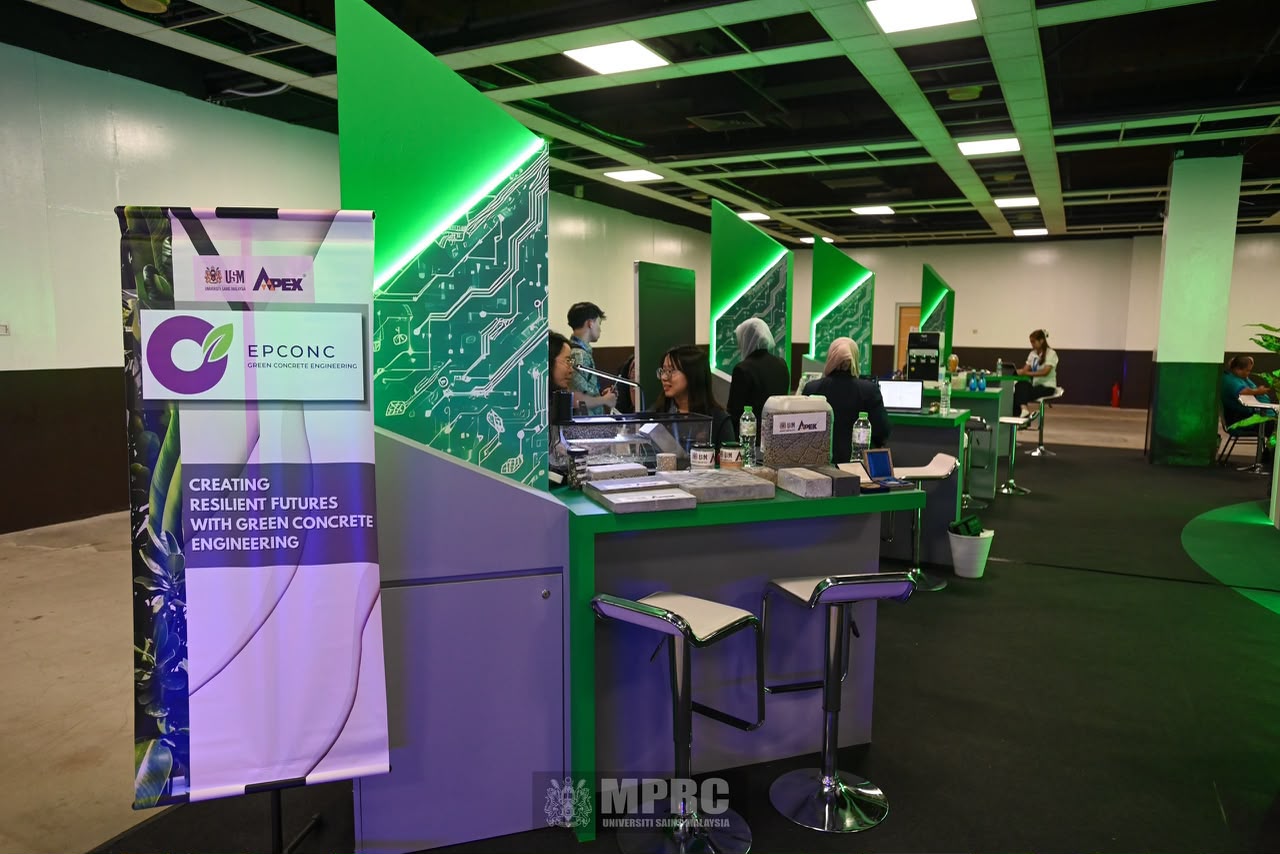
Five technologies presented at URIIS 2026 show how university expertise can address needs in construction, semiconductors, healthcare and national security.
KUALA LUMPUR, 24 September 2026 – How can buildings be constructed with a lower carbon footprint? How can a small drone be detected before it approaches a sensitive site? And how can a smaller business obtain cybersecurity protection it can realistically use?
At the University Research and Innovation Investment Summit (URIIS) 2026, Universiti Sains Malaysia (USM) brought developing answers to these questions. Its five featured technologies spanned green concrete, semiconductor wafers, lead-free radiation shielding, anti-drone radar and cyber defence. Their range points to a strength of university research: the ability to connect knowledge across disciplines with problems faced by industry and society.
Held from 21 to 23 September at the World Trade Centre Kuala Lumpur, URIIS brought universities, researchers, companies and investors together to examine how research could be put to use. In his closing remarks, Minister of Higher Education YB Dato’ Seri Diraja Dr. Zambry Abd Kadir reported that 120 engagements had led to 84 potential industry collaborations and a projected investment potential of RM24 million.
For USM, those national figures provide a backdrop to a more specific undertaking. A technology ultimately earns its value by solving a problem in the conditions where it is needed. The university’s five innovations show how that process can take different forms, from pilot production and manufacturing partnerships to technology transfer and commercialisation already under way.
Eco-Crete addresses a major question for construction: how to reduce emissions associated with a material used on an enormous scale. Incorporating fly ash and calcined clay as alternatives to Portland clinker-based ingredients, the green concrete is reported to have the potential to reduce carbon emissions by up to 90 per cent compared with conventional concrete. Its promise lies in combining material performance with environmental benefit, provided suitability, cost and consistency can be demonstrated for wider construction use.
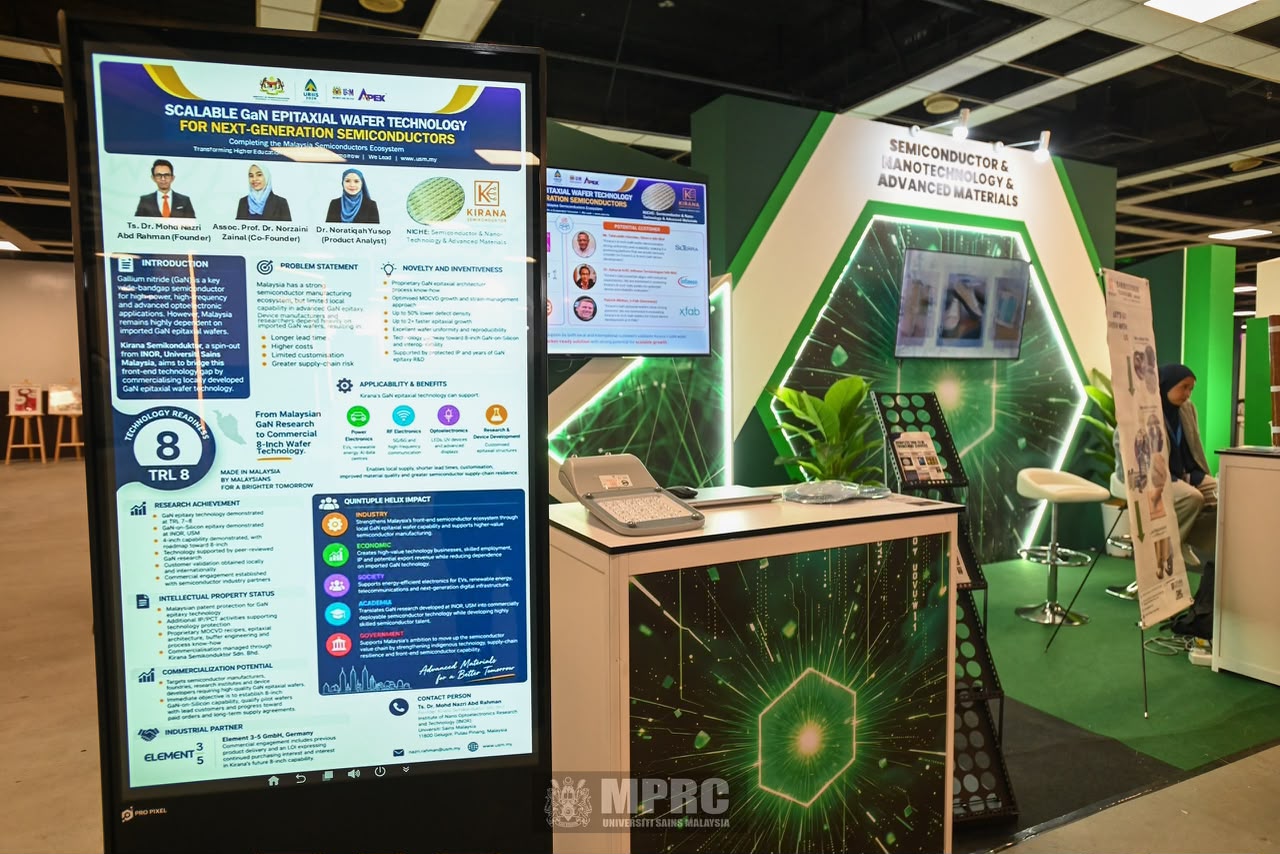
Within the semiconductor supply chain, USM’s gallium nitride (GaN) research is advancing towards industry-grade pilot production. The material is suited to high-power, high-frequency electronic and optoelectronic applications. The proposed supply of high-quality GaN wafers could position USM to contribute at the foundational materials stage of specialised device development, including applications in automotive technology, telecommunications and power systems.
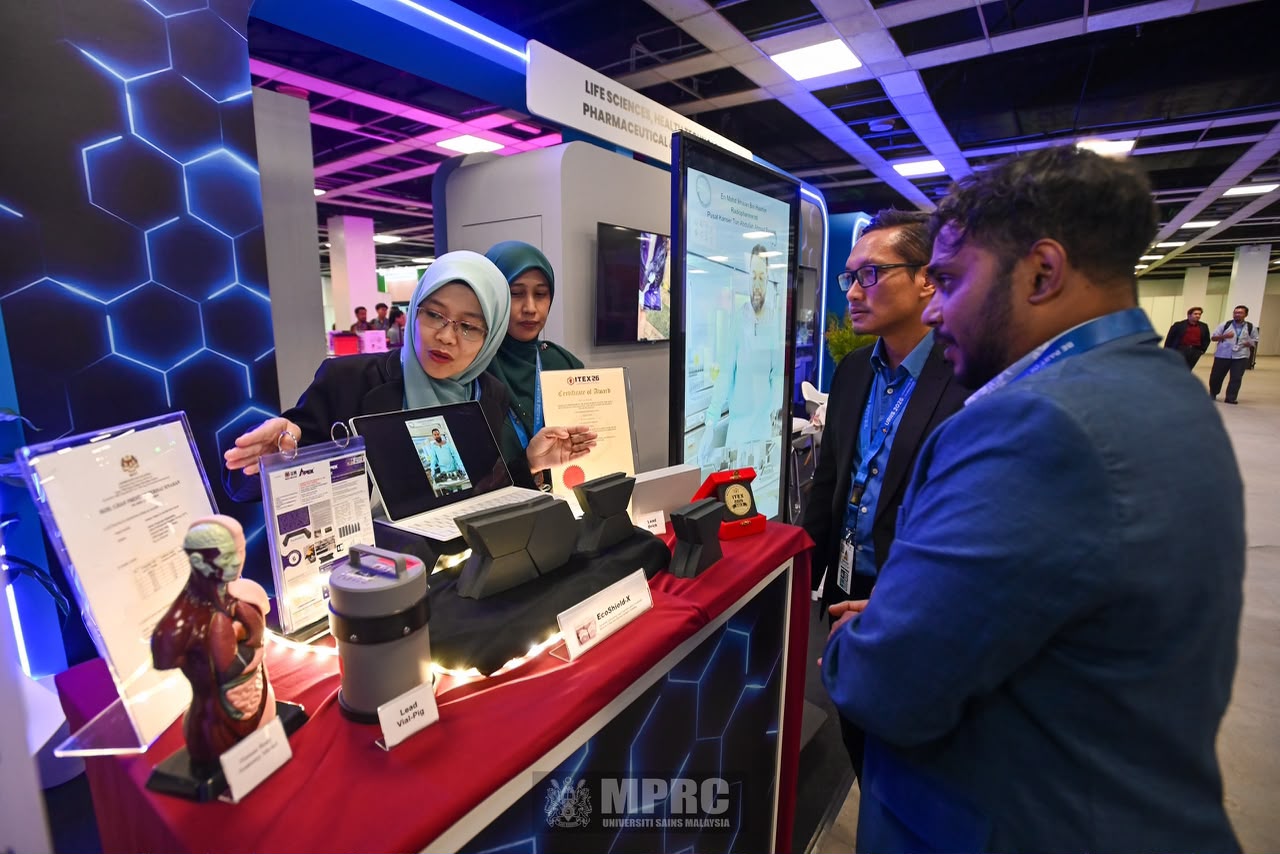
The need for radiation protection is the focus of EcoShield-X. This lead-free, modular interlocking block system is designed for applications that include diagnostic imaging, research and industrial radiography. Following technical validation, the technology has entered industry engagement to explore larger-scale manufacturing, licensing and deployment. Its design illustrates how materials research can offer shielding options that respond to both safety and environmental considerations.
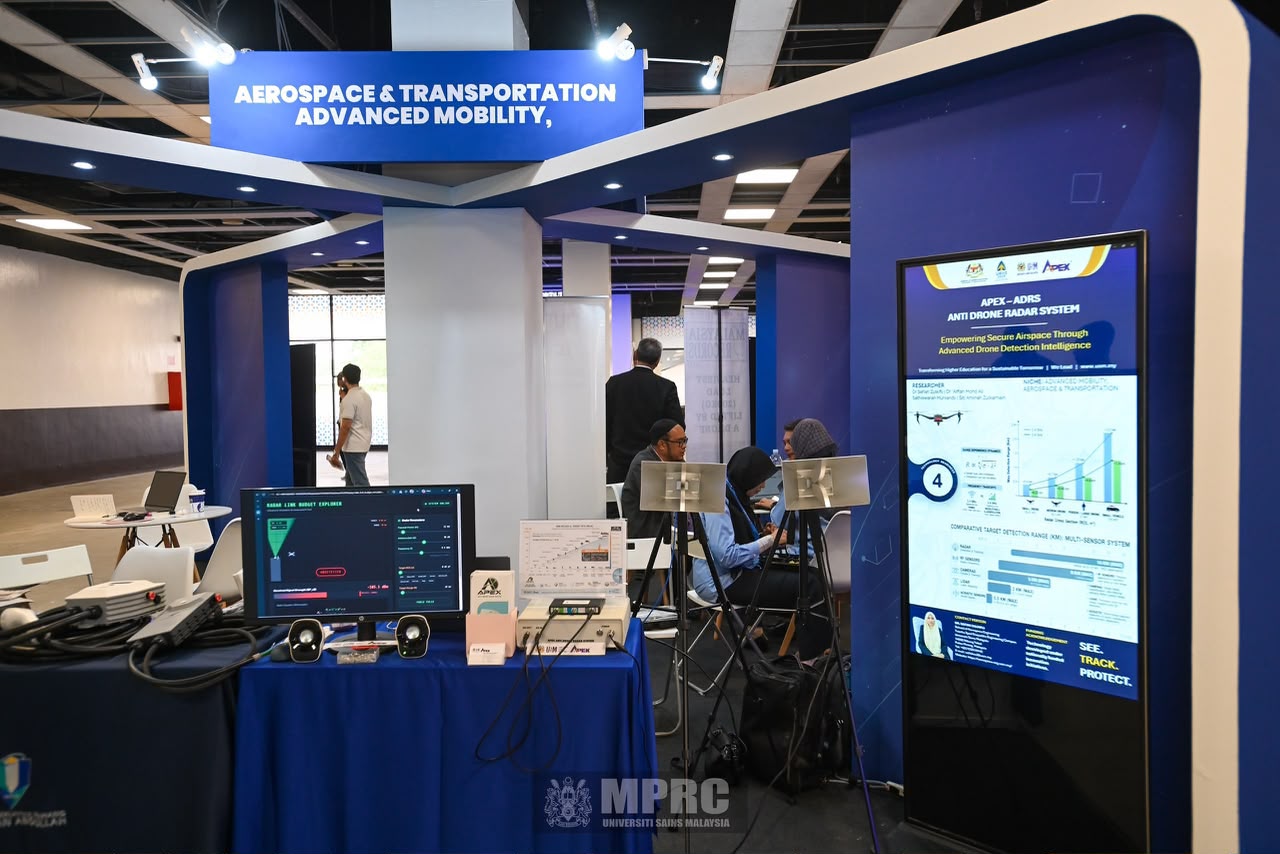
For physical security, the APEX Anti-Drone Radar System (Apex-ADRS) targets an increasingly difficult surveillance problem: small, low-flying drones that can be hard to distinguish from other objects. Developed by USM’s School of Aerospace Engineering, the system combines Frequency-Modulated Continuous Wave radar with micro-Doppler analysis to detect, track and classify objects. Potential applications include the protection of critical infrastructure, borders and airports, subject to further development and assessment with industry partners.
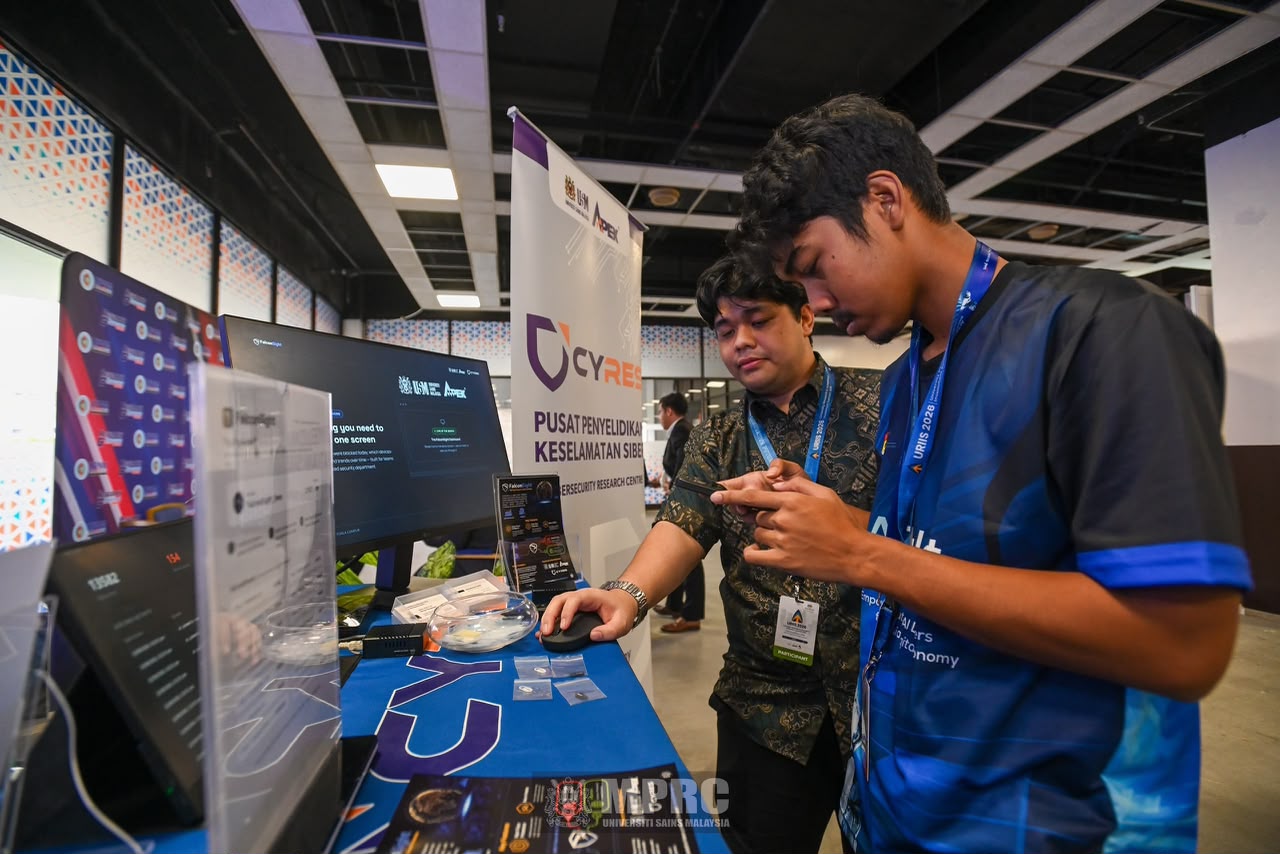
In the digital sphere, FalconSight represents an achievement already beyond the exhibition stage. Developed at USM’s Cybersecurity Research Centre and commercialised through BitRanger Sdn. Bhd., it filters and blocks malicious domains at the Domain Name System (DNS) layer. Its focus on small and medium enterprises addresses a defined user need: more accessible cyber protection without the infrastructure of a large corporate security operation.
The five technologies are not at identical stages of development. That is an accurate picture of innovation in practice. Some require proof of performance under operating conditions; others need manufacturing capacity; one has already established a commercial route. USM brought them to URIIS to connect researchers’ expertise with industry capabilities that could advance each technology’s next stage.
The Higher Education Minister stressed that every promising engagement needs a partner, a follow-up action and a measure of progress. For USM, that work now begins with these five technologies. The summit’s value will become clearest when developed materials enter production chains, designed systems are tested in operational settings, and research-based solutions reach the people and organisations that need them.