TELLING STORIES AND CARING FOR PLANETARY HEALTH: WHEN MANGROVES ARE NO LONGER JUST ‘MUDDY WASTELANDS’
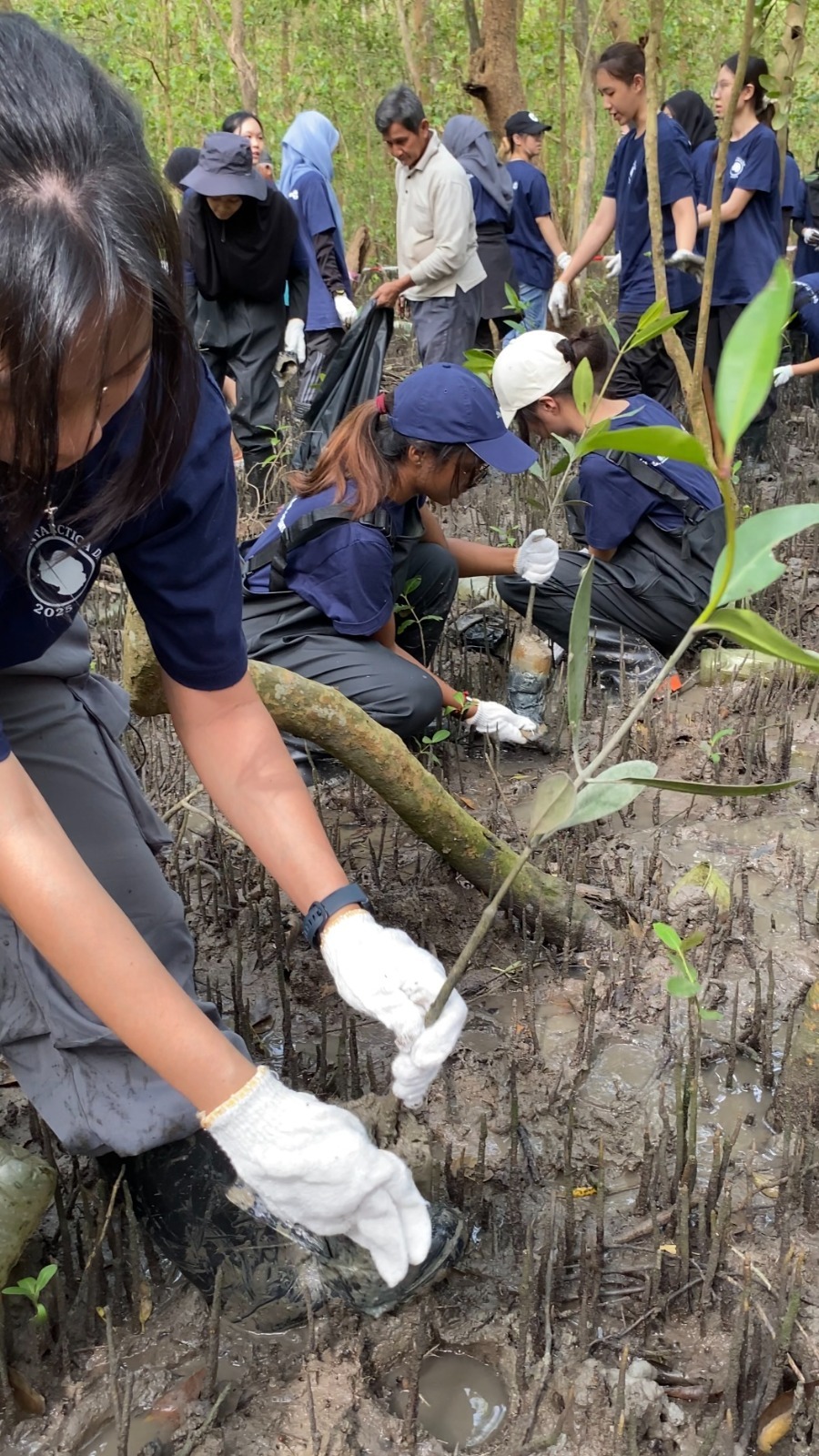
USM PENANG: Mangroves, often dismissed as muddy wastelands have been proven time and time again to be among nature’s most effective defence system against disasters and a home for diverse marine life.
As they silently protect coastlines and traps carbons, their presence would also sustain marine life that feeds coastal communities. All these fall under the ecosystem services that provide food, water, regulating air quality and supporting fisheries as nursery breeding grounds.
Despite its crucial role in environmental and human health, mangrove forests across Malaysia continue to disappear at an alarming rate due to coastal development, pollution and land conversion, threatening both biodiversity and the coastal communities (as referred to the United Nations Sustainable Development Goals/SDG11: Sustainable Cities and Communities).
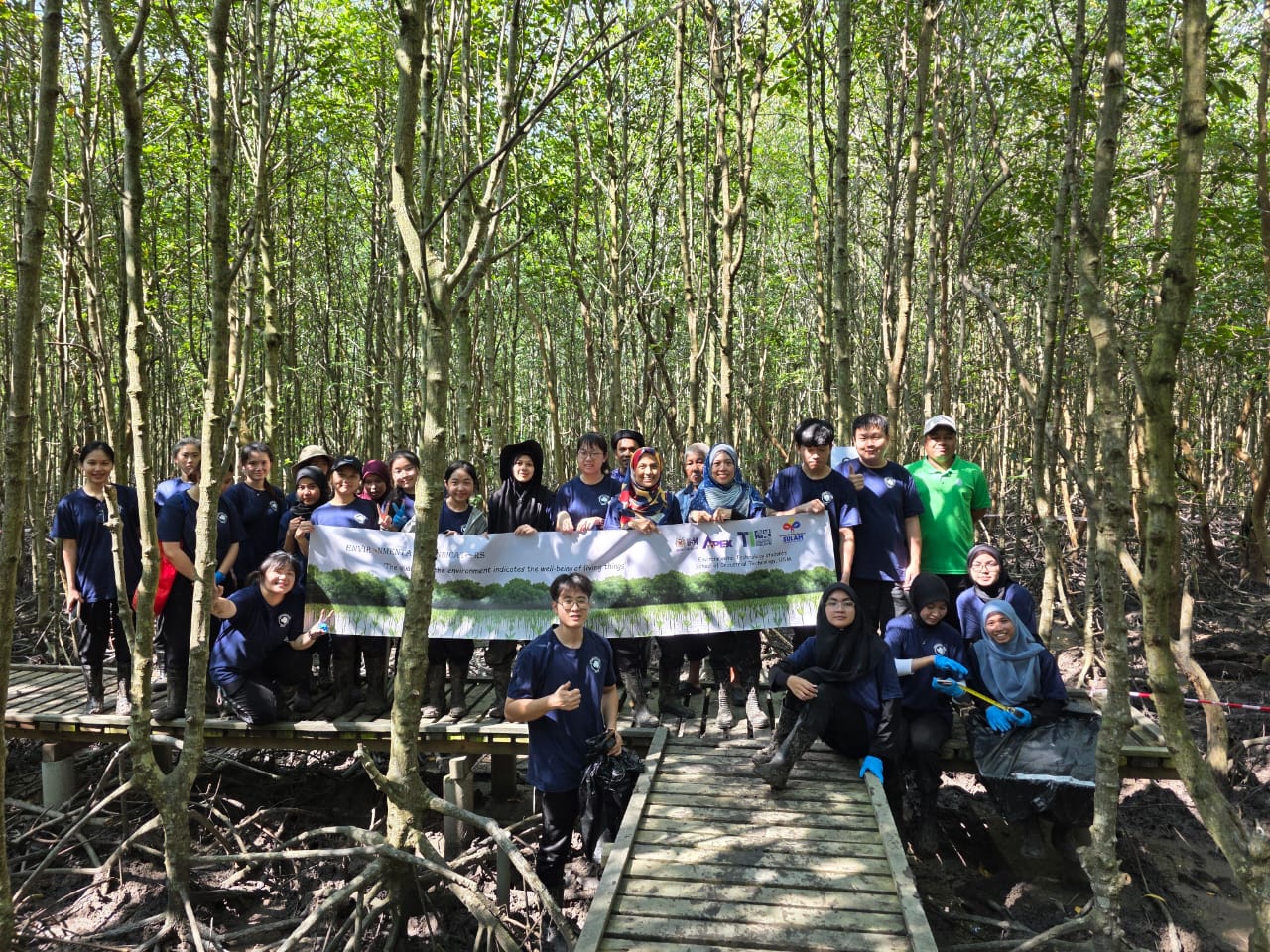
With these concerns in mind, a group of undergraduates from Universiti Sains Malaysia (USM) worked alongside members of the Penang Inshore Fishermen Welfare Association (PIFWA) and took to the wild for a clearer understanding of the real value of mangroves recently.
The study was not solely on the mangroves’ presence in the ecosystem but as a type of living flora that protect livelihoods.
How the Mangrove Tells its Story
In the field study conducted on November 2 last year at Sungai Acheh in Nibong Tebal, Penang, the USM undergraduates which were made up of 11 groups undertook observations of over a total area of 275 square meters provided by PIFWA. With each group observing a 25-square-meter-plot, what emerged was a picture of an ecosystem barely holding on.
A closer look revealed a landscape that “spoke’ out through snails, crabs, and mudskippers - nature’s early warning system known as bioindicators.
The field study was part of the academic coursework under the Environmental Bioindicators modules and was delivered through the Service-Learning-Malaysia—University for Society (SULAM-USM) framework. By placing community engagement at the heart of academic learning, this activity paved the way for students to apply academic learning within a real-world conservation setting. It further provided the opportunity to work with the local community that relied on the mangrove for its livelihood (directly supporting SDG4: Quality Education).
The Sungai Acheh mangrove supports a diverse range of mangrove flora, including the genera ‘Avicennia’, ‘Rhizophora’, and ‘Bruguiera’.
As the area was extensively diverse, it was ideal to view both plants and animals as bioindicators, which are natural pointers indicating the ecosystem’s health.
Among the fauna recorded were the Red Berry Snail (Sphaerassiminea miniata) and Marsh Treaders (Hydrometridae sp.), both of which are highly sensitive to pollution and disturbances in the sediment and water quality - key indicators of water quality and ecosystem health (relating to SDG 6: Clean Water and Sanitation).
Crustaceans such as the Red Mud Crab (Scylla olivacea) and Blue Mud Crab (Scylla paramamosain) were observed through extensive burrow networks, implying efficacious sediment aeration and nutrient cycling.
Their presence reflects an active coastal system that supports both SDG14 (Life Below Water) and SDG15 (Life On Land).
Taken together, the presence of these species - each one being sensitive in different ways to any environmental disturbance suggests that the Sungai Acheh mangrove system remains ecologically stable, supple, and capable of supporting advanced life systems.
Where Care Took Root
Through tangled roots and thick sediments lies one of nature’s most sophisticated defence systems— a living barrier coastline, functioning as powerful carbon sinks, safeguarding communities from the encroaching ocean, and reducing the pace of climate change. The initiative was more than just an observation; it was an engagement.
As part of the community effort, students and PIFWA members contributed to the restoration of degraded areas by planting about 160 mangrove saplings.
While the number may appear modest, each tree would someday stand to strengthen the coastline, sequester carbon as a sink in the sediment, and provides habitat for marine species crucial to local fisheries - supporting food security and sustainable coastal livelihoods (SDG 14).
Beyond restoring coastlines, mangroves are identified as blue carbon ecosystems, acting as the backbone in planetary health.
Not only do they capture and store carbon more efficiently than many other terrestrial forests, they also help in regulating climate change while supporting biodiversity and livelihoods that revolve around the coastal system. This occurs when carbon is stored, not only in but deep within the sediment over long periods of time.
This in turn helps to reduce the presence of carbon in the atmosphere, which makes mangrove restoration a practical form of Climate Action (SDG 13) — where local care contributes to global climate stability.
When Learning Happens With, Not Just From
Crucially, the collaboration was not one-sided.
Students gained valuable insights that extended beyond the confinement of the lecture halls - how tides shift seasonally, how species behaviour changes with weather patterns, and how mangroves recover when given time and care.
In turn, PIFWA members learned that their local knowledge about mangroves were supported and extended by theoretical observations of the bioindicators. The exchange empowers the concept of community engagement and local traditional knowledge under the planetary health framework.
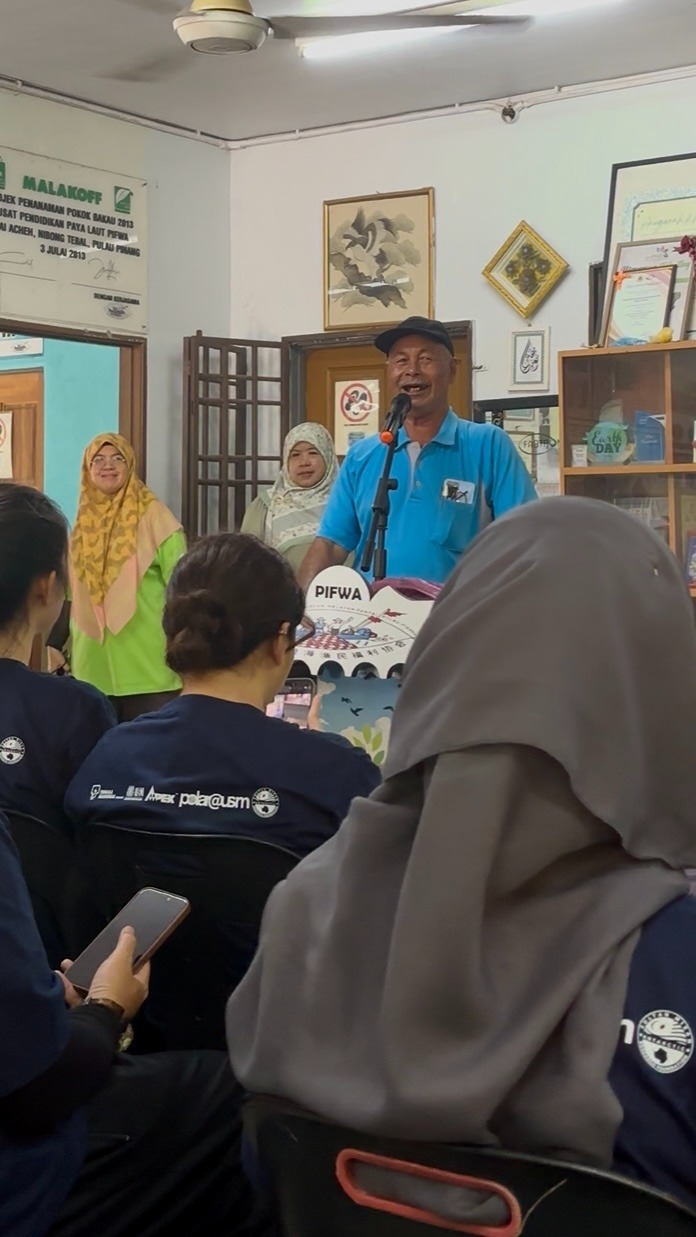
Members of PIFWA community additionally shared their experience in establishing mangrove nurseries which has garnered popularity over time, and now supplies mangrove saplings both locally and internationally.
It is heartening to see what begins as a conservation effort has evolved into a sustainable, community driven organisation.
Members of PIFWANITA, the women’s wing of the community, also promoted their homemade products such as jams, drinks, and other delectables, all of which were made from fruits and ingredients sourced organically in mangrove areas.
This demonstrated how a healthy ecosystem and its associated ecosystem services and planetary health contribution can support community livelihoods, empower women and strengthen community resilience (SDG 15).
The Education That Does Not End in the Classroom
This experience was an eye-opener as it changed the perception which the study group previously had on mangroves. Rather than just viewing them as trees, they are now seen as a system that supports and contributes to communities.
Students gained a better understanding and deeper appreciation of the connections between environmental protection, strength, and social welfare through then SULAM-USM framework.
This partnership improved community relations with the university and reaffirmed the importance of long-term stewardship, reflecting the values of Partnership for the Goals (SDG 17).
Not Ours Alone
The Sungai Acheh initiative reflects a larger lesson when universities step beyond campus walls and communities step into the learning process, benefitting both parties.
Along with practical learning, habitat restoration, and working hand-in-hand with the local community, the initiative brought to life the values of Sustainable Development Goals (SDGs) posited throughout the article.
Above all, it portrays how sustainability is not built through policy alone, but through shared efforts on the ground.
Mangroves may still be misunderstood by many, but for those working knee-deep in the mud - students and fishermen alike, their value is boundless.
Mangroves are not wasteland.
They are breathing landscapes that project, provide, and sustain - if given the chance and with the right understanding.
Text: Angelin Mary Arul, Undergraduate Student, Environmental Technology, School of Industrial Technology; Dr. Widad Fadhullah, Senior Lecturer, Environmental Technology, School of Industrial Technology, USM
Photos: Fatema Yasser, Undergraduate Student, Environmental Technology, School of Industrial Technology; Associate Prof. Dr. Japareng Lalung, Senior Lecturer, Environmental Technology, School of Industrial Technology, USM
- Created on .
- Hits: 494
