HBP-USM STUDENTS GAIN REAL-WORLD EXPOSURE THROUGH ASPEN VISION CITY INDUSTRY LEARNING VISIT
BATU KAWAN, 26 June 2026 – A group of undergraduate and postgraduate students from the School of Housing, Building and Planning (HBP), Universiti Sains Malaysia (USM), gained valuable first-hand exposure to township development, sustainable construction, smart urban systems and industry-based learning during a study tour to Aspen Gallery, Aspen Vision City, Batu Kawan, yesterday.
The visit was led by the HBP-USM Deputy Dean (Academic, Career & International), Gs. Dr. Mohd Ismail Isa, together with several HBP lecturers, and was hosted by senior representatives of Aspen Group.
The programme formed part of HBP-USM’s continuing effort to strengthen experiential learning beyond the lecture hall, especially through the contribution of Dato’ Seri Nazir Ariff Mushir Ariff, Co-founder and Executive Deputy Chairman of Aspen Group, who has been appointed as an Eminent Scholar at HBP-USM.
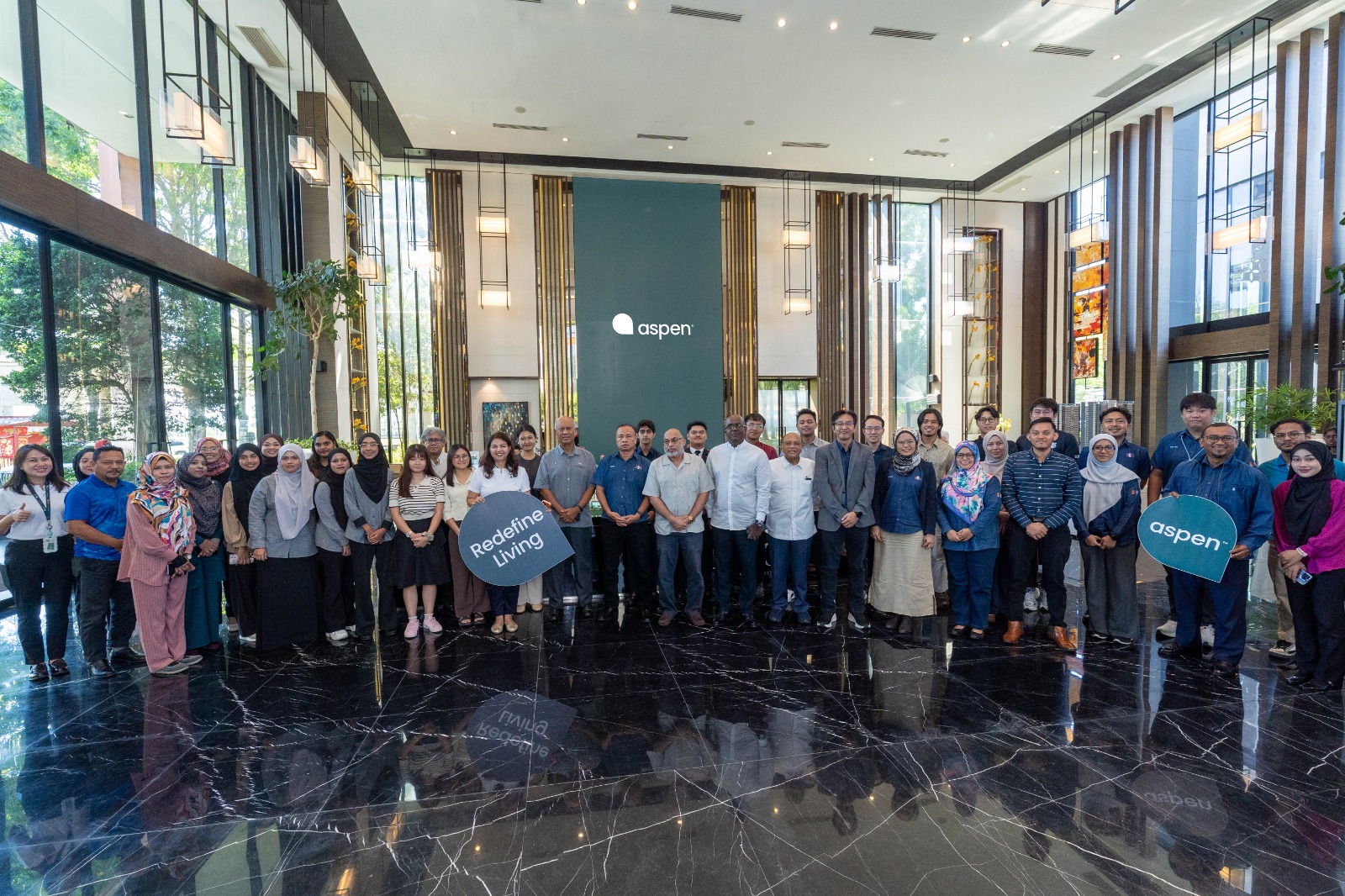
The visit began with a welcoming address by Nazir Ariff, who outlined the purpose of the study tour and encouraged students to view the built environment not merely as physical development, but as a process that requires vision, responsibility, innovation, and sensitivity towards people and place.
The technical briefing and question-and-answer session were conducted by Ir. Anilarasu Amaranazan, Group Managing Director of Aspen Group, who shared practical insights into the planning and development of Aspen Vision City, a major township development in Batu Kawan.
Through the session, students were exposed to the realities of township development, including land transformation, infrastructure planning, ecological considerations, project phasing, road systems, building components, market needs, community facilities, and long-term liveability.
For the students, the visit was more than a conventional site tour. It became a living classroom where theories in urban planning, construction management, sustainability, environmental management, and community-oriented development were connected directly with real industry practice.
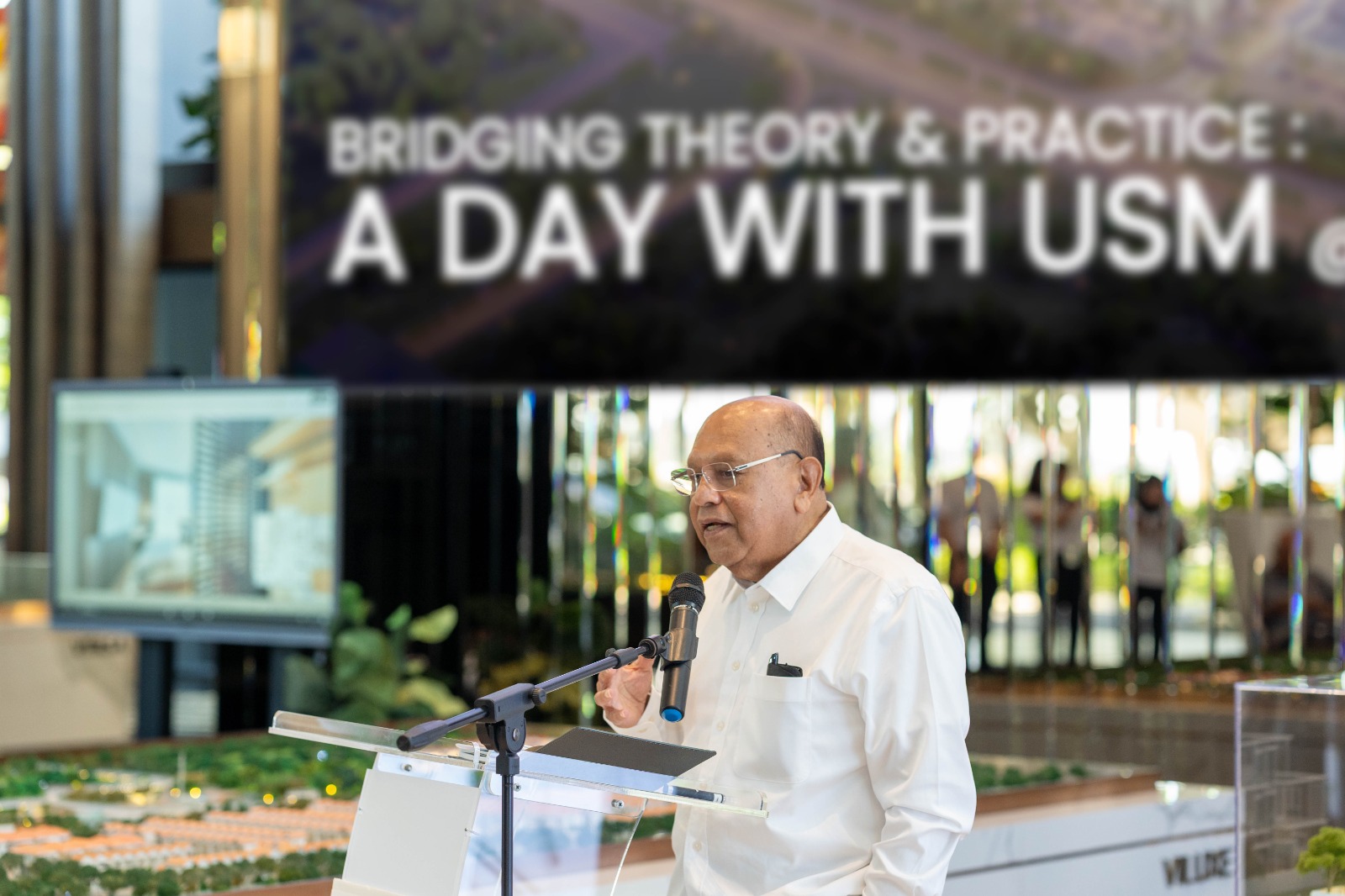
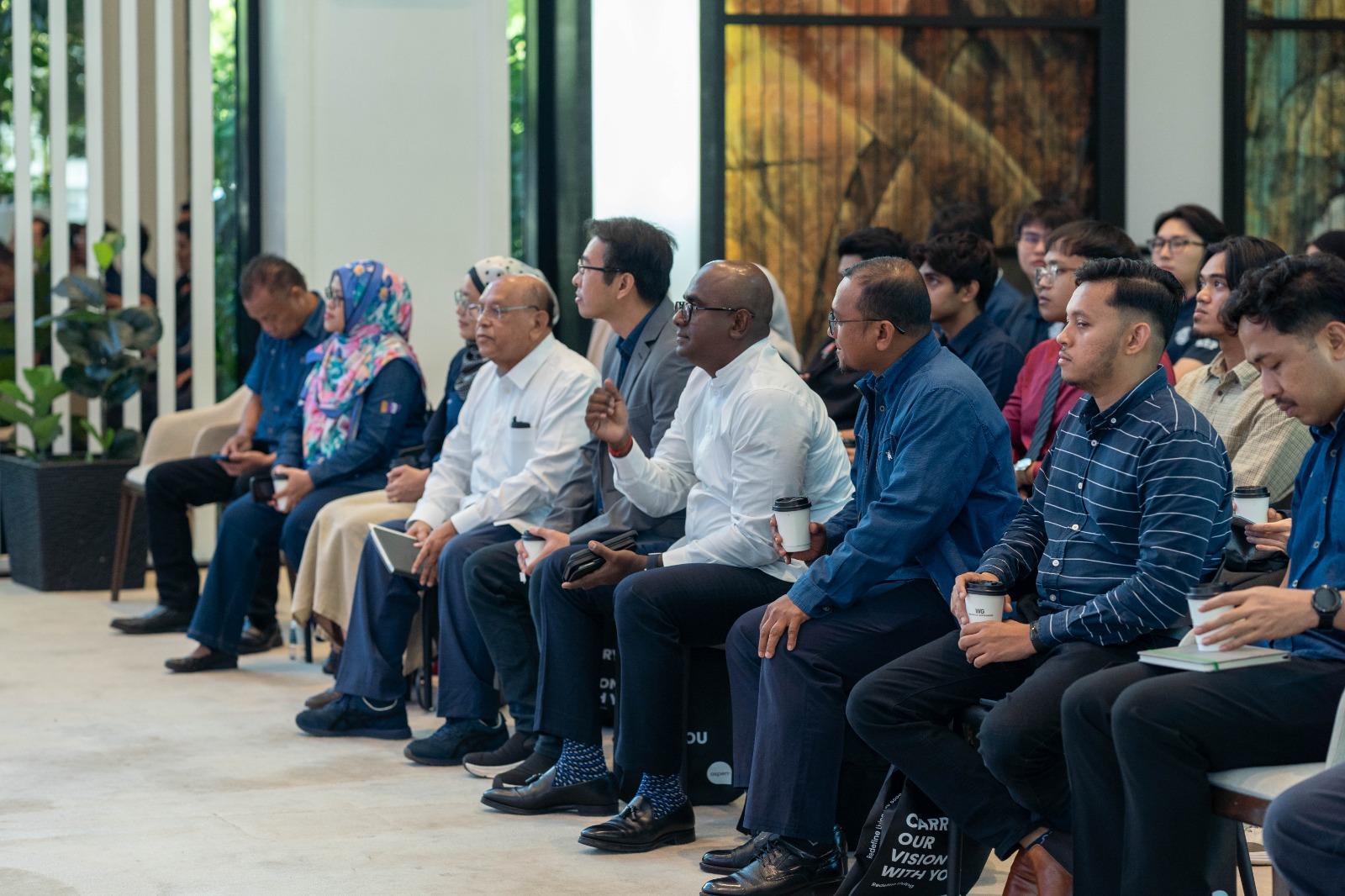
Throughout the study tour, students were encouraged to ask questions and engage with industry practitioners from Aspen’s respective departments.
They were pleased to receive direct explanations on various aspects of township development, including building planning, road networks, infrastructure coordination, public spaces, waste management systems, and the overall integration of residential, commercial, and community components.
This interaction helped students better understand the complex balance between design ambition, technical feasibility, regulatory requirements, environmental concerns, cost implications, market expectations, and the needs of future residents.
One of the key learning areas was the development of a well-organised township that supports good living.
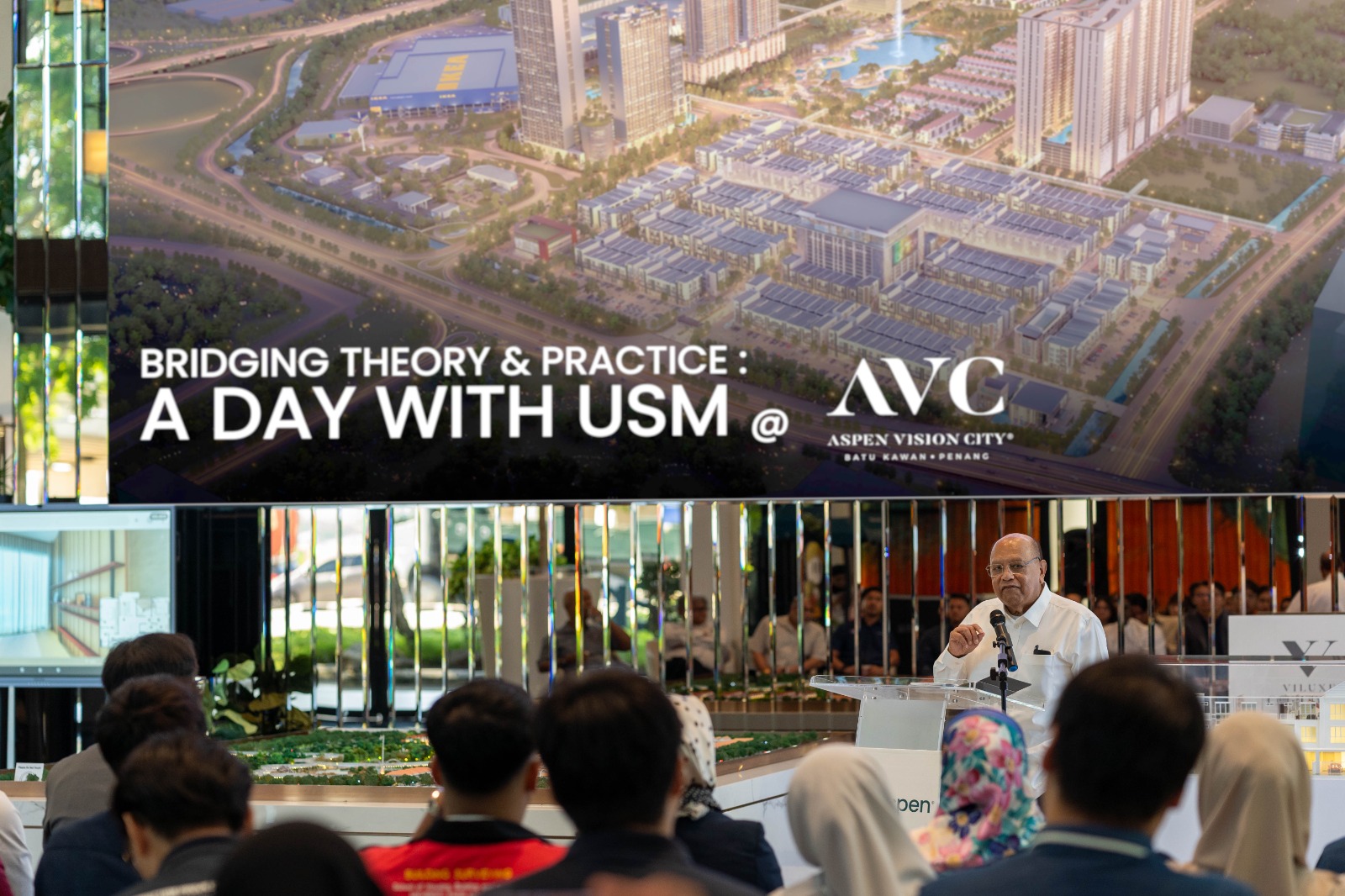
Students observed how public spaces, access networks, residential components, commercial areas, community facilities, and landscaped environments are integrated to create a functional, liveable, and people-centred urban setting.
A major point of interest was Aspen’s innovative waste management approach, including the Automated Waste Collection System (AWCS) introduced in selected Aspen developments.
The system uses a closed-loop pneumatic vacuum network to transport household solid waste through underground pipes to a centralised collection facility.
Through this exposure, students learned how smart urban systems can improve cleanliness, reduce manual waste handling, minimise odour and pest issues, and create a more hygienic living environment.
The system also demonstrated how technology can be embedded into township planning to support sustainability, efficiency, and better urban management.
The study tour strongly reflected the value of Nazir Ariff’s appointment as an Eminent Scholar.
His role goes beyond formal academic engagement, as he actively opens pathways for students and lecturers to encounter the realities of the industry.
Through his leadership and network, HBP-USM students are given opportunities to connect classroom learning with actual development challenges and professional decision-making.
USM Vice-Chancellor, Professor Dato’ Seri Ir. Dr. Abdul Rahman Mohamed, said the visit reflects USM’s commitment to producing graduates who are academically strong, professionally relevant, and ready to contribute meaningfully to society.
“USM believes that meaningful education must connect knowledge with real-world experience. Through strong industry collaboration, our students are able to see how ideas, research, and classroom learning are translated into practical solutions that benefit communities, industries and the nation.
“The involvement of eminent industry figures such as Dato’ Seri Nazir Ariff strengthens USM’s mission to nurture graduates who are not only competent, but also innovative, responsible, and future-ready,” he said.
The Dean of HBP-USM, Associate Professor Sr Ts. Dr. Md Azree Othuman Mydin, said the visit was an important continuation of HBP’s commitment to industry-relevant education.
“HBP is committed to ensuring that our students are not only technically competent, but also able to understand the wider realities of development, including sustainability, liveability, technology, community needs, and industry expectations. Visits such as this provide direct learning experiences that cannot be fully replicated in the classroom,” he said.
He added that collaboration with industry figures such as Dato’ Seri Nazir Ariff enables HBP-USM to strengthen its academic programmes, broaden students’ perspectives, and encourage more applied research that responds to real industry and societal needs.
For the participating students, the tour provided a clearer understanding of how development decisions affect people, places, and the environment.
It also helped them appreciate the complexity of turning a masterplan into a functioning township, where every element from land preparation and infrastructure to public spaces, road systems, and waste management plays a role in shaping urban life.
The Aspen Vision City visit demonstrated how the appointment of an Eminent Scholar can bring direct benefit to the school, students, and lecturers.
By connecting academic knowledge with industry realities, HBP-USM continues to prepare future built environment professionals who are technically skilled, socially aware, environmentally responsible, and capable of contributing to sustainable development in Malaysia and beyond.
Text: Associate Professor Dr. Shaik Abdul Malik Mohamed Ismail, Senior Editorial Consultant, MPRC@USM
- Created on .
- Hits: 712
