WHERE RESEARCH MEETS REALITY: HBP-USM AND INDUSTRY AFFILIATES JOIN FORCES
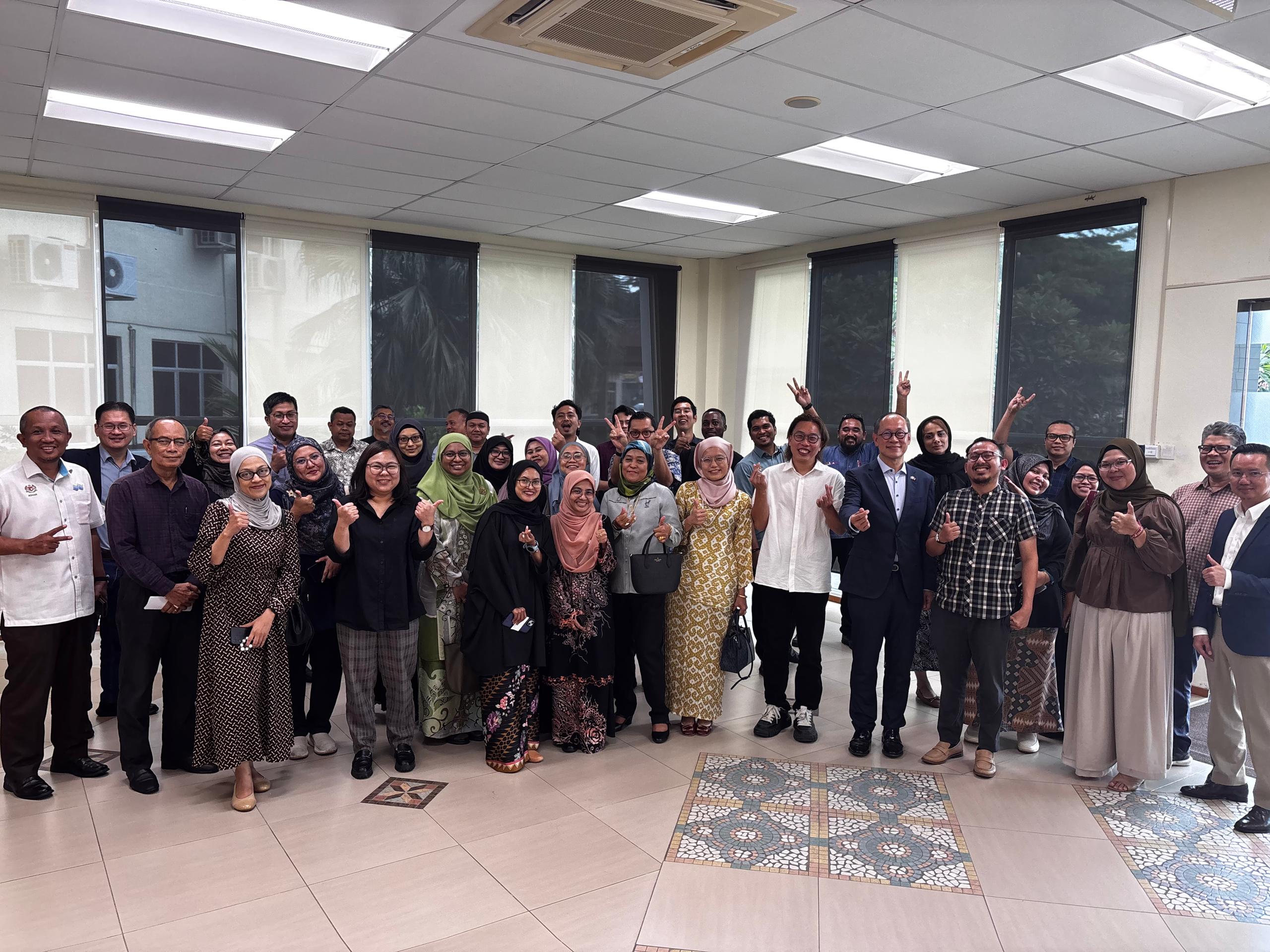
USM PENANG, 14 May 2026 – The School of Housing, Building and Planning (HBP), Universiti Sains Malaysia (USM), successfully organised the Research Cluster Workshop on 7 May 2026 at the Toray-USM Knowledge Transfer Centre, USM.
The workshop marked a significant step in strengthening collaboration between academia and industry, particularly in advancing research excellence, innovation, and professional engagement within the built environment field.
Research Clusters and Industry Participation
The session brought together 15 industry affiliates to join and engage with the seven HBP research clusters, creating a meaningful platform for knowledge sharing, strategic networking, and potential future collaboration.
The involvement of industry partners reflects HBP’s continuous commitment to ensuring that its research remains relevant, practical, and responsive to current industry needs and future built environment challenges.
The seven HBP’s research clusters involved in the workshop were Energy Efficient Buildings & Design, Cultural Heritage Resource Management, Disaster Management & Design, Innovative Management in Built Environment, Resilient Living Environment, Construction Digital Transformation, and Innovative Construction Materials & Technology.
These clusters represent HBP’s wide-ranging research strengths and demonstrate the school’s multidisciplinary approach in addressing issues related to sustainability, heritage, disaster resilience, construction innovation, digital transformation, and community well-being.
Among the industry affiliates involved in the workshop were Penang Green Council, East Design Architect Sdn. Bhd, Catalyst – Malaysia Learning Spaces (MYLES), Think City Penang, WW Quantity Surveying Consultancy, Conevo Green Consultancy Sdn. Bhd., JJ Planning Consult, Astino Berhad, Perunding Kos Bersatu Sdn. Bhd, Jabatan Warisan Negara, Jabatan Landskap MBSP, and JPS Kedah.
Their participation brought valuable perspectives from diverse professional areas, including sustainability, heritage conservation, urban planning, architecture, landscape, quantity surveying, water management, learning spaces, construction materials, and built environment.
Leadership Perspectives
From the wider university perspective, Vice-Chancellor of USM, Professor Dato’ Seri Ir. Dr. Abdul Rahman Mohamed, emphasised the importance of research that creates value beyond the university setting.
“University research must continue to move beyond academic boundaries and create meaningful impact for society, industry, and the nation. Strong collaboration between researchers and industry partners is essential in ensuring that knowledge generated within the university can be translated into practical solutions, innovation, and sustainable development.”
In his remarks, the Dean of HBP, Associate Professor Sr Ts. Dr. Md Azree Othuman Mydin, highlighted that industry collaboration is an important driver in strengthening the HBP’s research direction and impact.
“This workshop is a meaningful step in connecting HBP’s research strengths with the real needs of the built environment industry.
“By bringing our research clusters closer to industry affiliates, we are creating opportunities for research that is not only academically strong, but also practical, relevant, and impactful to society. The involvement of industry partners will certainly enhance HBP’s reputation as a leading built environment school,” he said.
Industry–Academia Engagement
A key highlight of the workshop was the industry affiliates session, which provided a meaningful space for industry representatives and HBP researchers to exchange ideas, share experiences, and identify possible areas of collaboration.
The session was not merely a formal introduction between academia and industry; it was a purposeful engagement that allowed both sides to understand each other’s strengths, expectations, and contributions.
For the researchers, it offered an opportunity to gain direct feedback from practitioners who are actively involved in the field.
For the industry affiliates, it created a platform to explore how academic expertise, research findings, and student involvement could contribute to solving real-world challenges.
The industry affiliates session also gave deeper meaning to the workshop by demonstrating how research can be translated into practical impact.
Through open discussion, participants were able to connect research themes with current industry needs such as sustainable development, resilient communities, conservation of cultural heritage, digital transformation in construction, disaster preparedness, and innovation in building materials.
This type of engagement is important because it helps ensure that research does not remain limited to academic publications, but can also support policy development, professional practice, community improvement, and industry innovation.
Voices from Industry
Representing the architectural and design industry, Dato' Seri Ar. Adjunct Professor Jong East Full of East Design Sdn. Bhd. highlighted the importance of collaboration between universities and professional practice.
“The built environment industry is constantly evolving, and HBP-USM play a very important role in shaping future ideas, talents, and solutions.
“Through this workshop, we can see strong potential for industry and academia to work together in producing research that responds to real project needs, community aspirations, and sustainable development goals. This kind of engagement is timely and highly valuable,” he said.
From the perspective of quantity surveying and construction cost management, Sr. Ts. Neoh Wen Wan from WW Quantity Surveying Consultancy shared that the workshop created an important bridge between research and professional application.
She said, “Industry involvement in research clusters is very important because it allows academic ideas to be tested against real industry conditions.”
"For the construction and quantity surveying fields, collaboration with HBP, USM can open new possibilities in cost efficiency, digital adoption, sustainable materials, and better project delivery. This workshop has created a strong foundation for meaningful partnerships”.
Outcomes and Future Directions
Overall, the session was described as extremely good, with positive participation, productive discussions, and strong potential for future collaboration.
The atmosphere throughout the workshop reflected a shared commitment to building stronger partnerships between the university and the industry.
The enthusiasm shown by the participants demonstrated that meaningful collaboration could lead to new ideas, stronger research directions, and greater impact for the built environment sector.
The Research Cluster Workshop was therefore more than a one-day event. It was a strategic effort to strengthen HBP’s research ecosystem and to build lasting bridges with industry partners.
With the support of its seven research clusters and industry affiliates, HBP is well-positioned to continue its role as a reputable, impactful, and forward-looking school in the field of the built environment.
Through this workshop, HBP has reaffirmed its commitment to research excellence, industry relevance, and meaningful collaboration.
The event stands as a positive step towards creating stronger links between knowledge, practice, and society, while enhancing HBP’s reputation as a respected built environment school that actively contributes to the future of the industry.
Text: Dr. Nooriati Taib, School of Housing, Building and Planning (HBP), USM/Editing: Tan Ewe Hoe/Photo: Zuhaida Ariffin, School of Housing, Building and Planning (HBP), USM
- Created on .
- Hits: 2585
