FROM RAINFORESTS TO THE UN GENERAL ASSEMBLY: TAN SRI DR. ZAKRI ABDUL HAMID CHAMPIONS THE GLOBAL SOUTH IN USM POSTGRADUATE SEMINAR
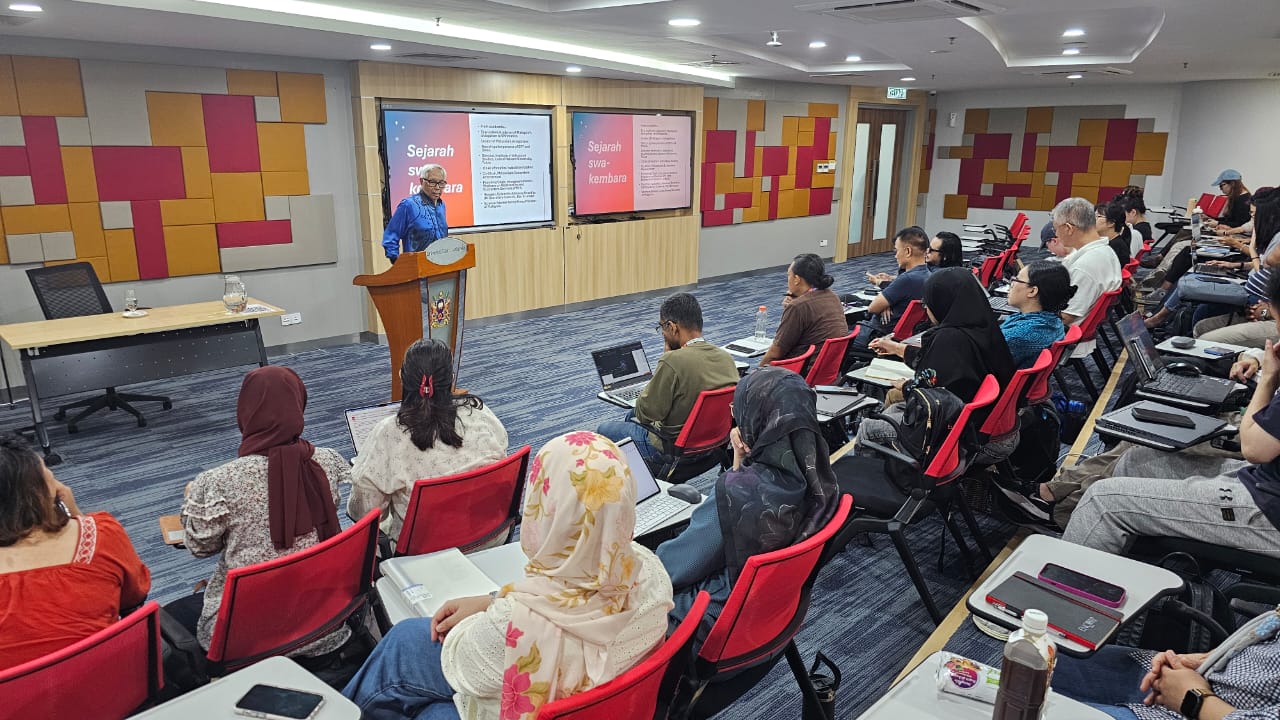
USM PENANG, 28 April 2026 – Universiti Sains Malaysia (USM) continues to expand postgraduate opportunities through its branch campus, USM@KL, located in Kuala Lumpur.
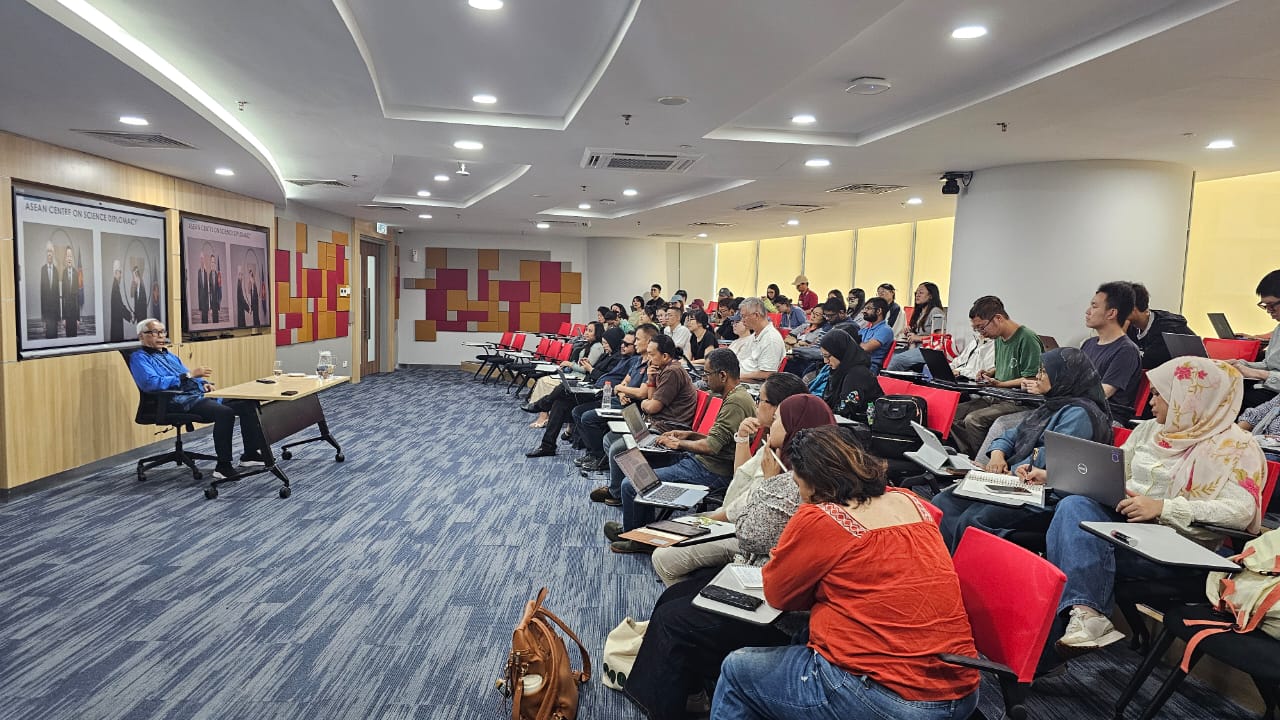
As part of the MSDP academic activities, USM@KL recently hosted a seminar exploring the relationship between science and international relations.
The session was led by Dr. Suzyrman Sibly, a distinguished authority in environment and sustainable development at CGSS, who guided participants in examining how scientific insights can inform and influence global diplomatic and policy frameworks.
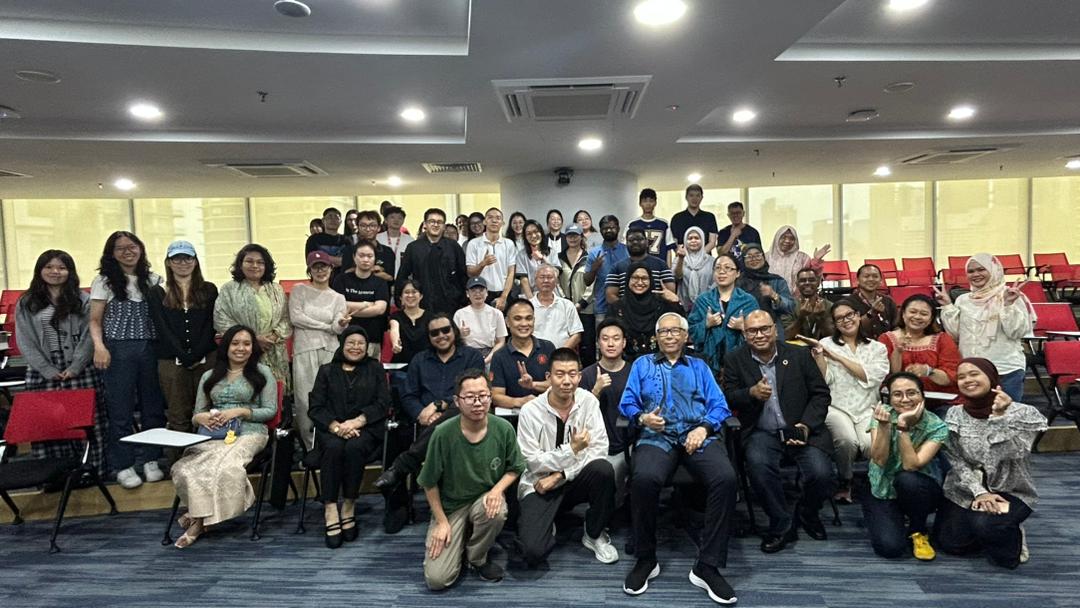
This seminar, held on 12 April, reflects USM’s commitment to fostering dialogue and advancing knowledge in sustainable development, positioning USM@KL as a hub for postgraduate education and thought leadership in the field.
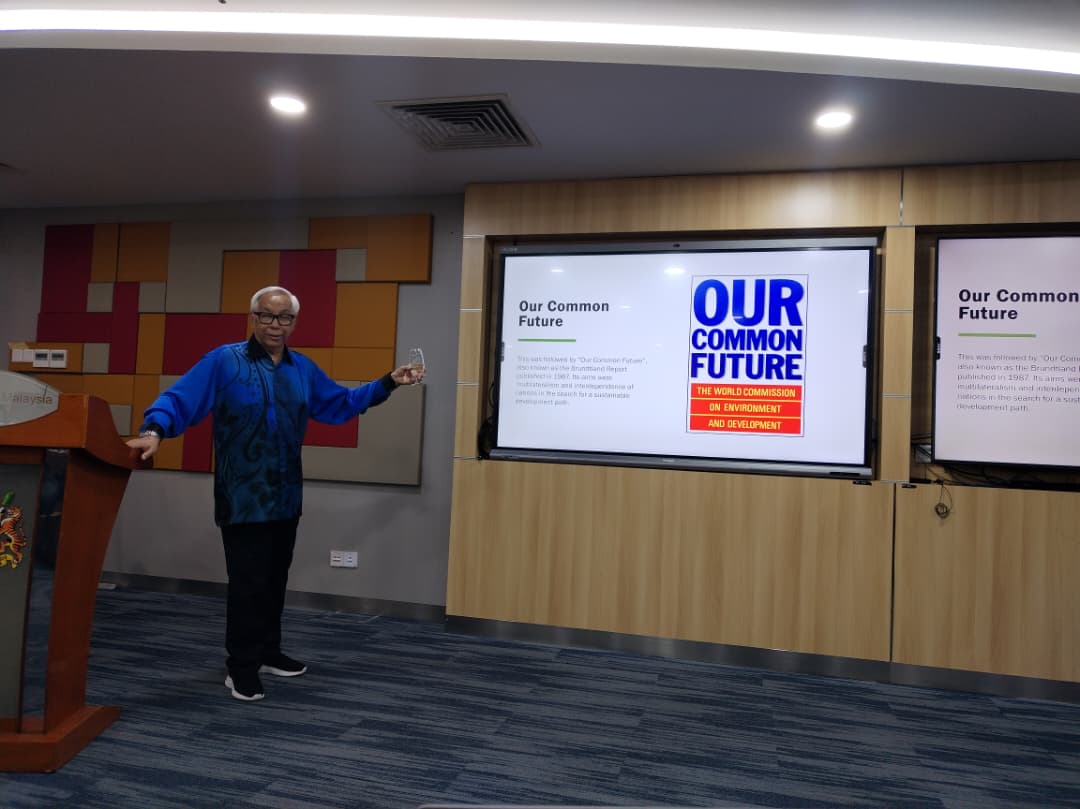
Delivering the keynote speech at the seminar was Professor Emeritus Tan Sri Dr. Zakri Abdul Hamid, a leading figure in global science policy discourse.
With more than four decades of experience in science policy matters, including his stints as the Science Advisor to the Prime Minister of Malaysia; the first Chair of the Intergovernmental Science-Policy Platform on Biodiversity and Ecosystem Services (IPBES); and a member of the Scientific Advisory Board to the UN Secretary-General, Zakri shared valuable insights into the formation of global treaties.
The Evolution of Diplomacy: From Gunboats to Global Collaboration
Zakri firstly mentioned modern science diplomacy in the context of historical examples.
He compared the cooperative and non-conquest nature of exploratory expeditions from China in the 15th century, led by Admiral Zheng He/Cheng Ho, on to the use of “gunboat diplomacy” by US Commodore Matthew Perry, who compelled Japan to open its borders in the 19th century.
However, contemporary politics call for a completely different approach. According to Tan Sri Zakri, science diplomacy had demonstrated its distinctive effectiveness between two distinct countries during the Cold War period.
Although the two countries were on the brink of nuclear annihilation, scientists from the two countries were engaged in intense dialogue. Such "Track II diplomacy" prevented any catastrophe.
The spirit of cooperation has been formulated into three pillars of modern politics:
- Science in Diplomacy (applying scientific data in policy-making),
- Diplomacy for Science (negotiating treaties that will allow funding of international scientific research), and
- Science for Diplomacy (research leading to political cooperation between hostile countries). With international experts raising alarm bells about the potential extinction of one million species, the need for such collaboration cannot be overstated.
A Geopolitical Tug-of-War: The Global North vs. The Global South
Politics however can derail science because of some deeply rooted geopolitical considerations, especially regarding the clash of interests between the developed Global North and the developing Global South.
This clash was brought into focus in the international arena through the Convention on Biological Diversity (CBD), which came into existence from the 1992 Rio Earth Summit. This convention is based upon an intricate balance of three objectives: Conservation, Sustainable Use, and Equitable Benefit Sharing.
Zakri explains that the Global North emphasizes "onservation" very highly, compelling many developing countries to conserve their tropical rainforests as "the lungs of the world" from the consequences of the climate change problem created by the West due to its carbon emissions in history.
On the other hand, the Global South insists on the principle of "sustainable use" of biodiversity resources for its economic survival.
He referred to the history of Malaysia to prove this point.
He said, “Malaysia had experienced very high levels of poverty immediately after independence, at around 47%. However, through the development of agriculture, especially planting oil palms, this was reduced to less than 10%. Development economist Professor Jeffrey Sachs, who acknowledged the importance of this sector to Malaysia, calls it the ‘saviour’ of the Malaysian people.”
“Western hypocrisy in criticising the developing countries is well understood in the developing world.”
The 1989 Langkawi Declaration became the turning point when developing nations came together for a resolution that environmental conservation should never become an instrument to thwart their development.
The Shadow of Biopiracy and the Technological Gap
The defensive stance of the Global South, however, is firmly based on the experience of "biopiracy" in history, when colonial states benefitted from biological resources without compensation.
According to Zakri, it should be noted that the backbone of the British Malayan economy was natural rubber, which was obtained from the seeds stolen by the British Empire from the Brazilian Amazon. Oil palm also originated in West Africa before being transported to Southeast Asia.
Today, the disparity continues with the structural dichotomy of “gene-rich” tropical countries and “technology-rich” developed countries.
In his presentation, Zakri spoke of a successful collaboration of Malaysian researchers with Harvard University, where extracts from the rainforests of Malaysia were found to have promising applications in the treatment of leukemia. But without adequate facilities for drug production and trials within the country, the financial rewards of these drugs cannot be enjoyed in their entirety by Malaysia.
The above examples make it imperative that countries implement the Access and Benefit-Sharing (ABS) agreements, such as the Nagoya Protocol, which require technology transfer and joint ownership if genetic resources are employed.
However, without an educated and scientifically aware diplomatic force, developing countries will always be one step behind the much more experienced delegation from the Western world.
Amplifying Indigenous Voices and Civil Society Pushback
The contemporary process of global governance also seeks to integrate different epistemological approaches. Western approaches to science are slowly realizing that traditional/local ecological knowledge as another form of science.
Traditional ecological knowledge passed down through generations among communities such as the local Orang Asli and the Penan is crucial in managing complicated forest ecosystems.
Additionally, NGOs have been crucial in giving a voice to communities in the Global South. Zakri highlighted the Third World Network (TWN), an international NGO based in Malaysia, and its prominent legal counsel, Meena Raman.
Unlike governments constrained by bureaucracy, NGOs have no constraints in voicing their opinions. NGOs are what Zakri refers to as the "loyal opposition" and which give developing nations the legal expertise required in UN summits to make sure that they do not accept unfavorable agreements.
Overcoming Silos and Building Institutional Might
The other weakness of the Global South is its lack of institutional capacity.
When US delegations go to UN conferences, they bring along several dozen lawyers specialising in different fields and climatologists. Meanwhile, developing countries usually send teams of only two or three delegates, lacking the resources to prepare more thoroughly.
On the domestic scene, governments are faced with a phenomenon known as the "silo effect," which is characterised by ministries of environment and economy protecting their so-called ‘respective jurisdictions’.
Breaking through to reach a consensus will entail significant political effort, including the use of the influence of regional associations such as ASEAN and G77 plus China.
Despite the availability of all possible data and research, science faces certain limitations in very politically charged emergencies.
For instance, Zakri pointed out the examples of transboundary haze in Southeast Asia and the discharge of radioactive wastewater into the sea following the incident in Fukushima.
Both times, scientific proof was ignored, thus showing that even having the best science would require the backing of expert diplomacy.
Looking Beyond 2030: The Path Forward
With the approaching deadline for achieving the 17 Sustainable Development Goals (SDGs) set out by the United Nations in 2030, scholars agree that reaching all goals would be extremely difficult, owing to global disparities and ongoing conflicts.
Frameworks for post-2030, such as "SDG Beyond 2030," initiated by the IISDS and Keio University, should emphasize practical approaches, beginning with existential issues such as eliminating poverty and educating everyone.
In addition, given the reduction in global birth rates, it is necessary to concentrate not on regulating population growth, but rather on enhancing the quality of human capital.
In order to survive, the Global South needs to bridge the gap between academia and policymaking. It is no longer acceptable for scientists to remain confined in their laboratories while producing articles for journals.
This is why UCSI University had established the International Institute for Science Diplomacy and Sustainability (IISDS). Zakri has been appointed as the Founding Director of this institution, which was officially launched by the then Minister of Foreign Affairs, Datuk Seri Dr. Zambry Abdul Kadir.
The IISDS is the first-ever science diplomacy institution in the Global South that aims to train young ASEAN diplomats and scientists in negotiating global environmental issues.
Science diplomacy is allowing developing countries to break away from their past role as mere suppliers of resources, and to assume their proper roles as leaders in creating an environmentally sustainable and economically balanced global system.
Text: Associate Professor Dr. Japareng Lalung, Regional Centre of Expertise (RCE) Penang, Centre for Global Sustainability Studies (CGSS), USM/Editing: Mazlan Hanafi Basharudin & Tan Ewe Hoe
- Created on .
- Hits: 983
