USM INTEL ANNUAL ENGAGEMENT SHARPENS FOCUS ON ADVANCED PACKAGING AND INDUSTRY ALIGNED RESEARCH

USM PENANG, 18 April 2026 – Universiti Sains Malaysia (USM) and Intel advanced their strategic collaboration through the Intel Advanced Packaging Research Grant Annual Meeting 2026, reinforcing a more structured and performance driven approach to semiconductor research.
Building on the 2024 grant initiative, the engagement has progressed into a more mature phase marked by systematic project monitoring, measurable outputs and expanded collaboration involving Universiti Malaysia Perlis (UniMAP) and Universiti Malaya (UM). The hybrid session combined technical presentations, formal evaluations and cross institutional discussions, reflecting a disciplined and outcome oriented research environment.
Research presented during the meeting centred on key areas in next generation semiconductor packaging, including artificial intelligence driven design, computational modelling, materials and interface engineering, thermal reliability and nanomaterials integration. These domains reflect a shift towards integrated, system level innovation required for advanced packaging technologies.

A defining feature of the collaboration is its structured performance framework. Intel Advanced Packaging Technical Lead Dr. John Tan Teng Hwang emphasised that research outputs are closely measured against defined expectations, introducing industry level accountability through clear milestones and deliverables.
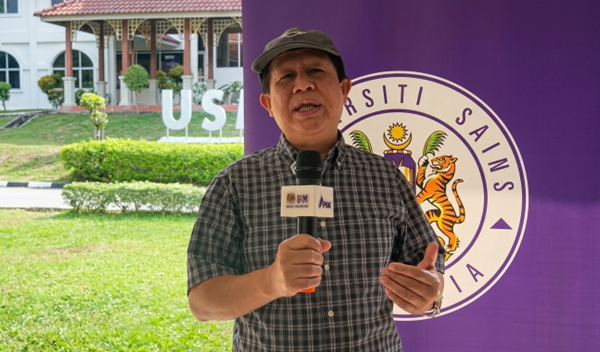
From the academic perspective, the collaboration has strengthened research execution and direction. Professor Ir. Dr. Mohd Zulkifly Abdullah noted that Intel’s consistent engagement model, supported by regular progress reviews and iterative feedback, enhances alignment between academic research and industrial application.
At the project level, research addressing wafer level challenges such as structural deformation and process reliability demonstrates direct relevance to manufacturing performance. These efforts contribute to improving yield and operational efficiency, strengthening Malaysia’s position within the global semiconductor value chain.
The initiative also aligns with Malaysia’s National Semiconductor Strategy. Professor Ir. Dr. Mariatti Jaafar @ Mustapha highlighted that the programme supports the development of specialised local expertise, contributing to the nation’s transition towards higher value semiconductor innovation.
From the industry perspective, Intel representative Dr. Beth Yam Wei Yin underscored the importance of student engagement in solving complex technological challenges, reinforcing the role of such collaborations in developing industry ready talent.
USM Vice-Chancellor, Professor Dato’ Seri Ir. Dr. Abdul Rahman Mohamed stated that the collaboration reflects the university’s commitment to advancing research that is both academically rigorous and aligned with national priorities, positioning USM as a key contributor to Malaysia’s semiconductor ecosystem.
Overall, the 2026 annual engagement reflects a clear evolution in industry academia collaboration, where structured evaluation, interdisciplinary research and talent development converge to drive outcome oriented innovation. The USM Intel partnership continues to serve as a strategic platform for advancing semiconductor research, strengthening national capabilities and translating research into tangible industrial impact.
Text: PrivinKumar Jayavanan, Media & Public Relations Centre (MPRC), USM/Photo: Afimie Baharit, Intern@MPRC, USM
- Created on .
- Hits: 618
