USM CONCLUDES TADARUS RAMADAN 1447H WITH KHATAM AL-QURAN CEREMONY
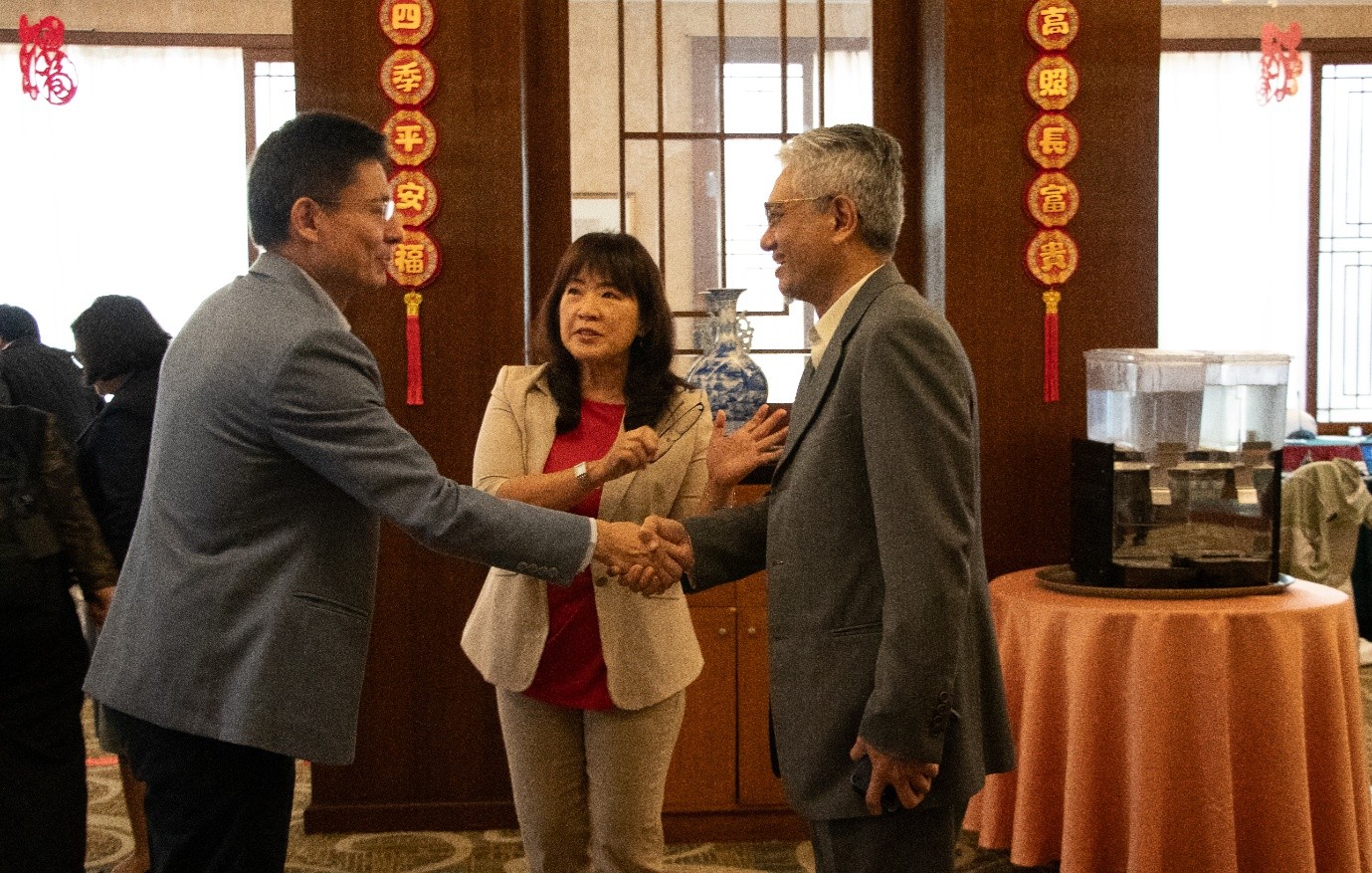
USM PENANG, 17 March 2026 – Universiti Sains Malaysia (USM) successfully concluded its Tadarus Al-Quran Ramadan programme for 2026M/1447H with a Khatam Al-Quran ceremony held at Dewan Muzakarah, Pusat Islam USM, adjacent to the Masjid Al-Malik Khalid compound.
The ceremony marked the completion of the collective recitation of the Holy Quran and highlighted the continued relevance of religious activities within a modern academic setting.
It also reflected the evolving participation patterns of the university community in hybrid spiritual programmes.
Organised by the Jawatankuasa Aktiviti Ramadan USM 1447H/2026M, the programme brought together 60 participants from across the campus.
Participants were divided into six groups, five male and one female, with each group guided by experienced mentors in Quranic studies.
This structured grouping served both pedagogical and quality-assurance purposes, ensuring consistency in recitation while allowing immediate correction and guided improvement, a defining feature that distinguishes structured tadarus initiatives from informal recitation practices.
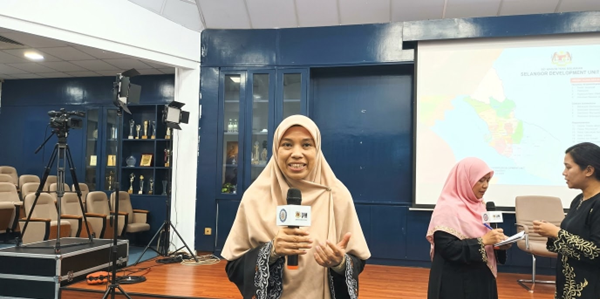
According to Islamic Affairs Officer, Ustazah Nor Fadhilah Wahab, the primary objective of the initiative was to facilitate the collective completion of the Quran from Juz 1 to Juz 30 within the month of Ramadan.
Beyond its ritual significance, the programme was designed to reinforce disciplined engagement with the text while fostering a communal spiritual environment among participants.
“The concept of khatam itself means completion or conclusion. Therefore, this ceremony symbolises that participants have successfully completed the recitation of the Al-Quran collectively throughout the month of Ramadan,” she said when interviewed.
Importantly, this year’s implementation retained a hybrid model, integrating both physical and online sessions.
While this approach began as a necessity during the pandemic, its continued use shows a wider shift towards more flexible models of engagement.
However, this shift has brought new patterns of behaviour. Although efforts were made to revive fully in-person sessions at the mosque, most participants still prefer joining virtually.
This trend reflects a broader change in how religious programmes are accessed and valued within busy academic and professional schedules.
The ease of online platforms, which allow participants to fit religious commitments into tight routines, has reshaped the way engagement is experienced.
According to the organisers, the main challenge is no longer running the programme itself, but encouraging participants to return to physical communal spaces without losing accessibility.
From a performance perspective, the programme was highly efficient: participants completed the full recitation in just 25 days, ahead of the usual 30‑day Ramadan cycle.
This faster completion shows strong group coordination and discipline, suggesting that the hybrid model, despite early concerns, does not reduce commitment or the quality of outcomes.
Participant feedback further highlights the programme’s teaching value.
The presence of qualified mentors giving real-time corrections was a key factor in improving accuracy and building confidence in recitation.
This guided learning element shows that the programme is more than just a ritual; it is a structured educational platform that combines correction, repetition, and supervised practice.
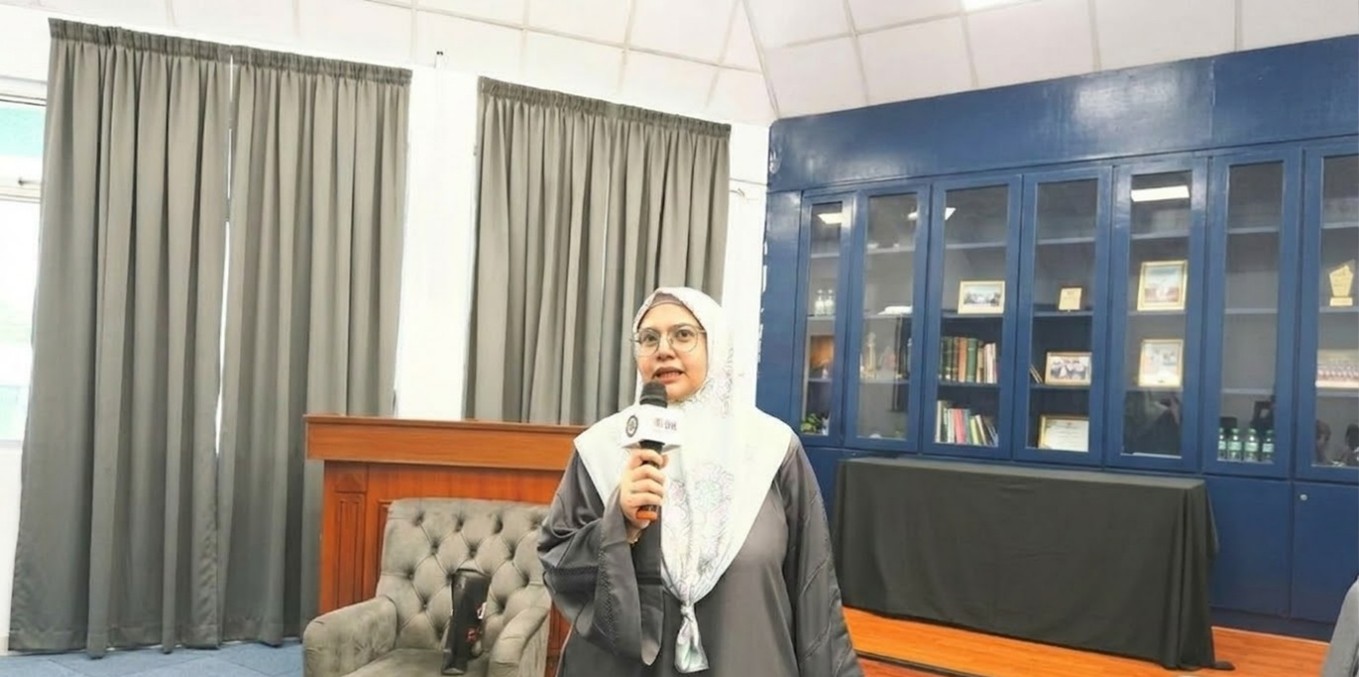
A participant, Azura Muhamad Marican, said that the programme provided an opportunity to enhance the quality of Quranic recitation through guidance from skilled instructors.
“The unique aspect of this programme lies in the presence of mentors/facilitators who provide immediate corrections to our recitation. This helps us improve while also enhancing our acts of worship throughout Ramadan,” she said.
Meanwhile, another participant, Dr. Fardzah Sulaiman described the achievement as the result of strong teamwork and continuous support among group members.
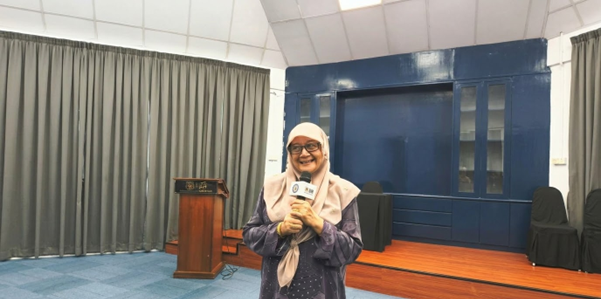
“With a strong sense of group spirit, we were able to complete the recitation within the stipulated timeframe. Despite time constraints, our collective commitment enabled us to achieve the target,” she said.
The addition of early morning and weekend sessions, some starting as early as 7.30 a.m., shows flexible scheduling designed to maximise participation across different availability.
These adjustments reflect the organisers’ effort to align the programme with modern lifestyle demands, helping sustain strong engagement.
Another important aspect of the programme is its focus on collective accountability.
Participants credited their ability to finish the recitation on time to strong group dynamics, mutual encouragement, and shared responsibility.
This shows the lasting importance of communal frameworks in supporting religious practices, even in digital settings.
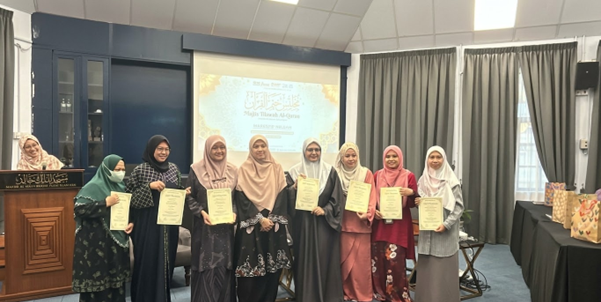
The ceremony ended with the presentation of certificates, hampers, and festive refreshments to recognise participants’ commitment throughout the programme.
Although ceremonial in nature, the closing segment also reinforced participation by recognising it as both an individual and collective achievement.
Looking ahead, organisers plan to sustain the momentum built during Ramadan by encouraging continued engagement with the Quran beyond the fasting month.
This supports the broader goal of making spiritual discipline a regular part of campus life, rather than a seasonal practice.
Overall, the USM Ramadan Tadarus 1447H programme shows a successful blend of tradition and adaptability.
Its results confirm that hybrid religious programmes are workable and offer a model for future initiatives that aim to balance accessibility, quality, and community in an increasingly digital environment.
Text: Privinkumar Jayavanan/Editing: Tan Ewe Hoe/Photos: Afimie Baharit, Intern@ MPRC
- Created on .
- Hits: 414
