USM PROFESSOR ADVOCATES EARLY GENETICS EDUCATION AT UNESCO GLOBAL FORUM, ADVANCING THE ERA OF PRECISION MEDICINE
USM PENANG, 23 February 2026 – The expertise of a Malaysian academic from Universiti Sains Malaysia (USM) in the field of genetics has once again received international recognition, following the presentation of a proposal to integrate genetics education at the primary school level during a prestigious global forum at UNESCO headquarters in Paris.
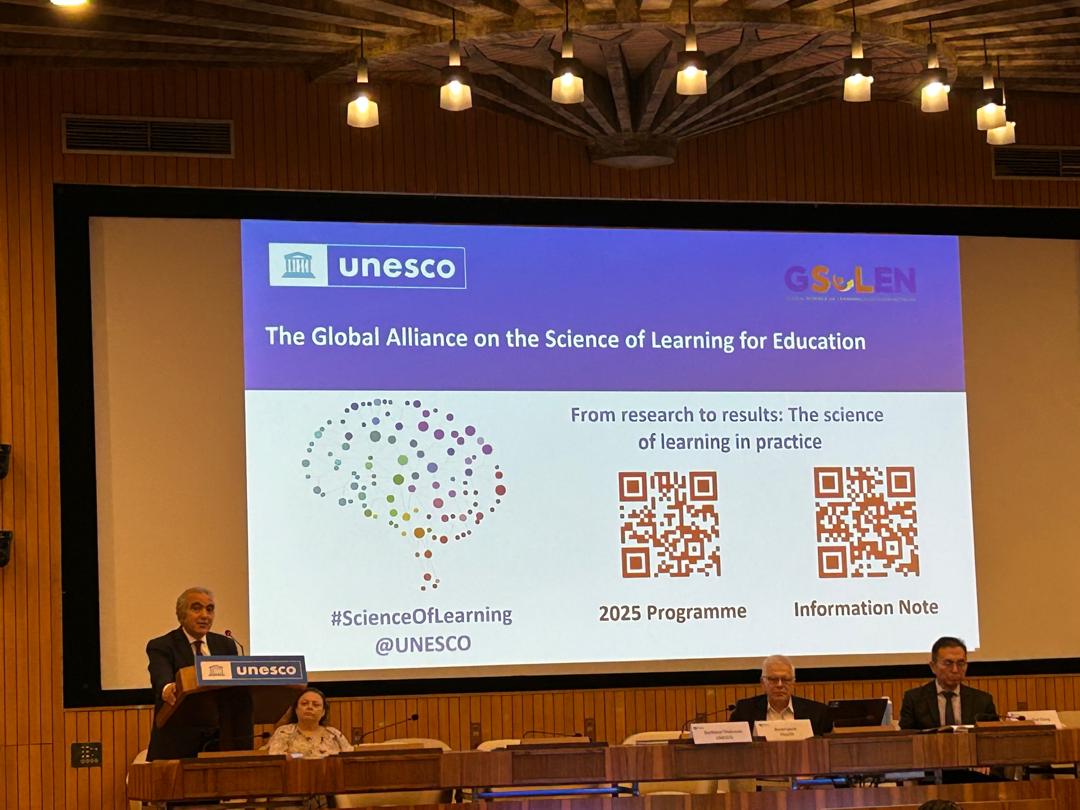
The proposal was delivered by Professor Dr. Zilfalil Alwi, an academician at the Human Genome Centre and Professor of Medical Genetics at the USM School of Medical Sciences, during the Annual Meeting of the Global Alliance on the Science of Learning for Education (GSoLEN), which was held last December.
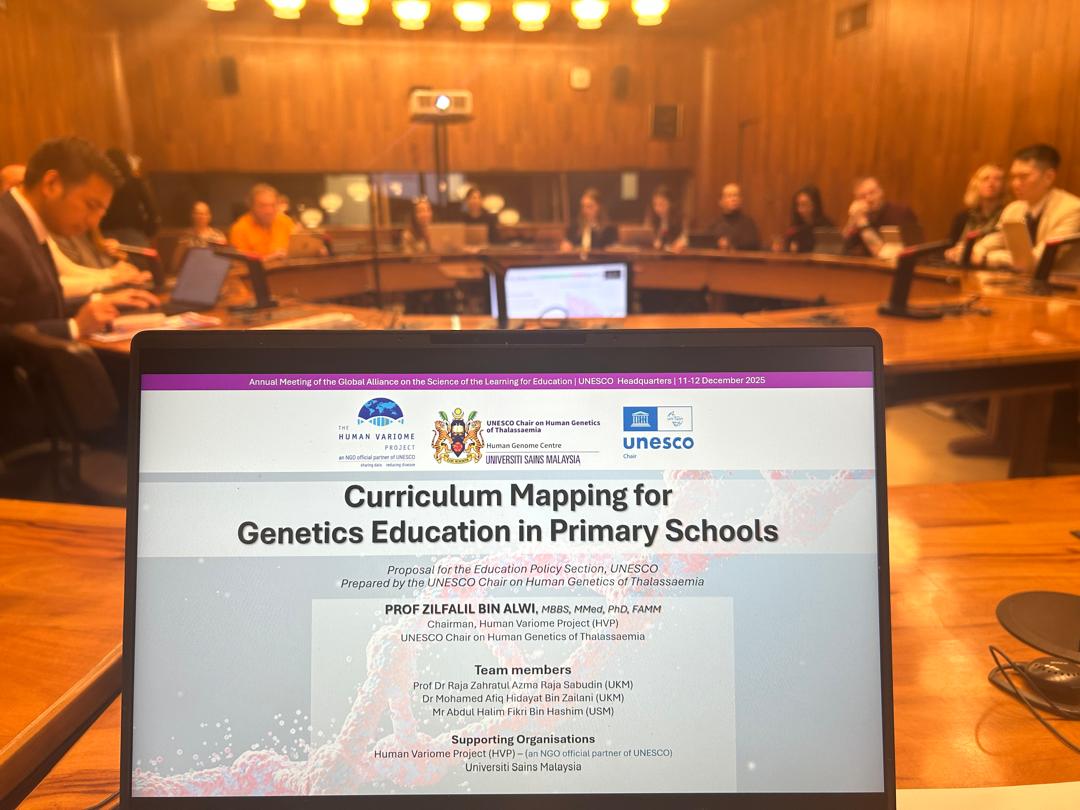
As the holder of the UNESCO Chair on Human Genetics of Thalassaemia, Zilfalil presented on “Curriculum Mapping for Genetics Education in Primary Schools,” emphasising the importance of building genetic literacy from an early age.
He highlighted that genetics now forms the backbone of biomedical research and precision medicine, which tailors prevention, diagnosis, and treatment to an individual’s genetic profile. Despite this, public understanding of basic genetic concepts remains limited.
Zilfalil stressed that instilling genetic literacy early will prepare future generations to navigate a rapidly evolving global health landscape.
“Genetic literacy needs to be instilled from the primary school level so that the future generation will not only understand science, but will also be ready to face the era of precision medicine in an informed and responsible manner,” he explained.

The UNESCO Chair recommended introducing age-appropriate genetics concepts in a structured manner at the primary school level.
This initiative is not aimed solely at producing scientists, but at helping young learners understand inheritance, health, and genetic variation.
“Genetic education is not about producing young scientists, but about developing a society that is health-aware and capable of making informed decisions,” Zilfalil added.
Such an approach is particularly relevant in low- and middle-income countries (LMICs), where hereditary diseases such as thalassemia continue to pose significant public health challenges.
Early exposure to genetic knowledge can raise awareness about the importance of screening, prevention, and responsible health choices.
He further noted that genetic literacy is a strategic necessity in the era of precision medicine, ensuring that society can engage meaningfully in discussions on ethics, data privacy, cultural values, and equitable access to medical advancements.
“Scientific knowledge cannot remain in the lab or in primary documents; it must be translated into classrooms in an inclusive, evidence-based, and future-oriented manner,” he said.
The proposal presented at GSoLEN positions genetic education at the primary school level not only as a curriculum enhancement but also as an investment in global capacity-building.
By spreading genetic knowledge early, education systems can prepare a generation ready to thrive in a world increasingly shaped by biology, technology, and health policy.
The GSoLEN meeting brought together researchers, educators, policymakers, and international organisations, with a strong emphasis on “knowledge brokering,” translating research outcomes into classroom strategies and educational policies, thereby strengthening the link between learning sciences and real-world educational practices.
Original Text & Photo: Professor Dr. Zilfalil Alwi/Editing: Mazlan Hanafi Basharudin
- Created on .
- Hits: 538
