HE ELCa 2025 UNITES STUDENTS NATIONWIDE IN LANGUAGE, CREATIVITY, AND INNOVATION
USM PENANG, 13 December 2025 – The Universiti Sains Malaysia (USM) School of Languages, Literacies and Translation (SoLLaT) brought the Higher Education English Language Carnival (HE ELCa) 2025 to a successful close this evening.
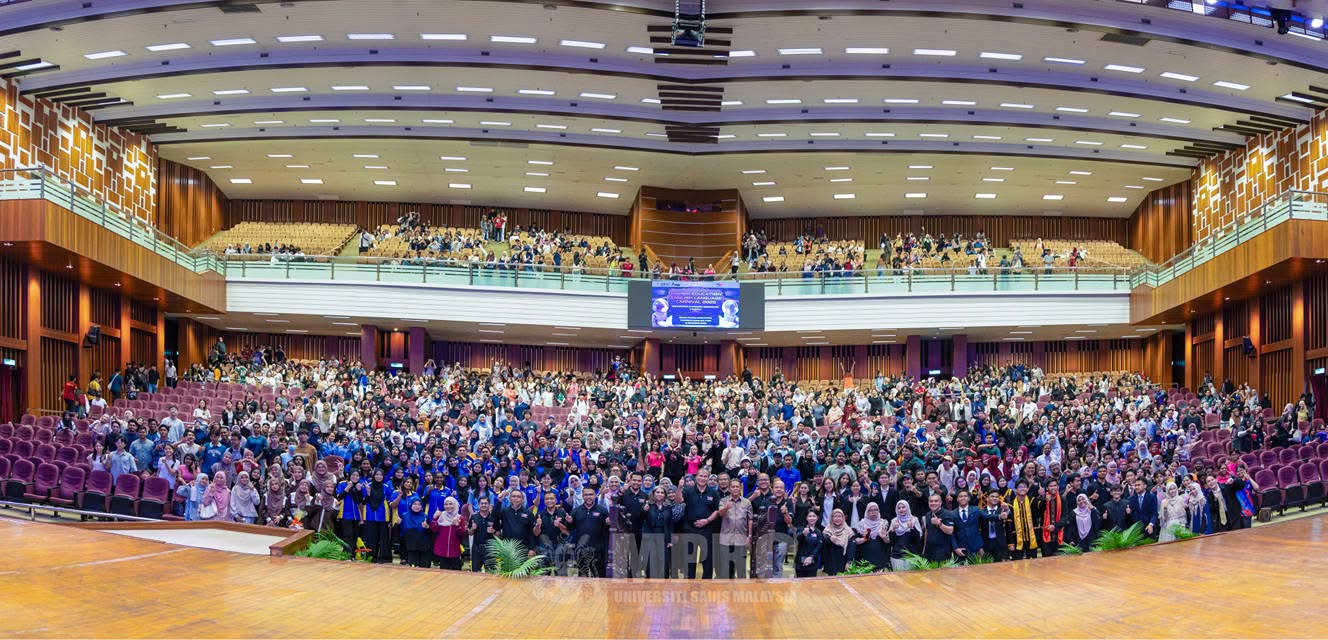
HE ELCa is a national initiative by the Ministry of Higher Education (MoHE) Malaysia under the Department of Higher Education (JPT) that brings together students from 16 local public universities in a nationwide celebration of English, creativity, and collaboration.
Aligning with the English Language Education Reform Roadmap 2015–2025, the carnival supports the goal of helping students graduate with stronger English proficiency.
With the theme “The Future is AI: Innovate, Communicate, and Sustain!” it captures the spirit of today’s learners — creative, adaptable, and ready to shape the future with technology and language.
It also highlights how language and technology empower students to express ideas, build confidence, and engage with future-focused skills.
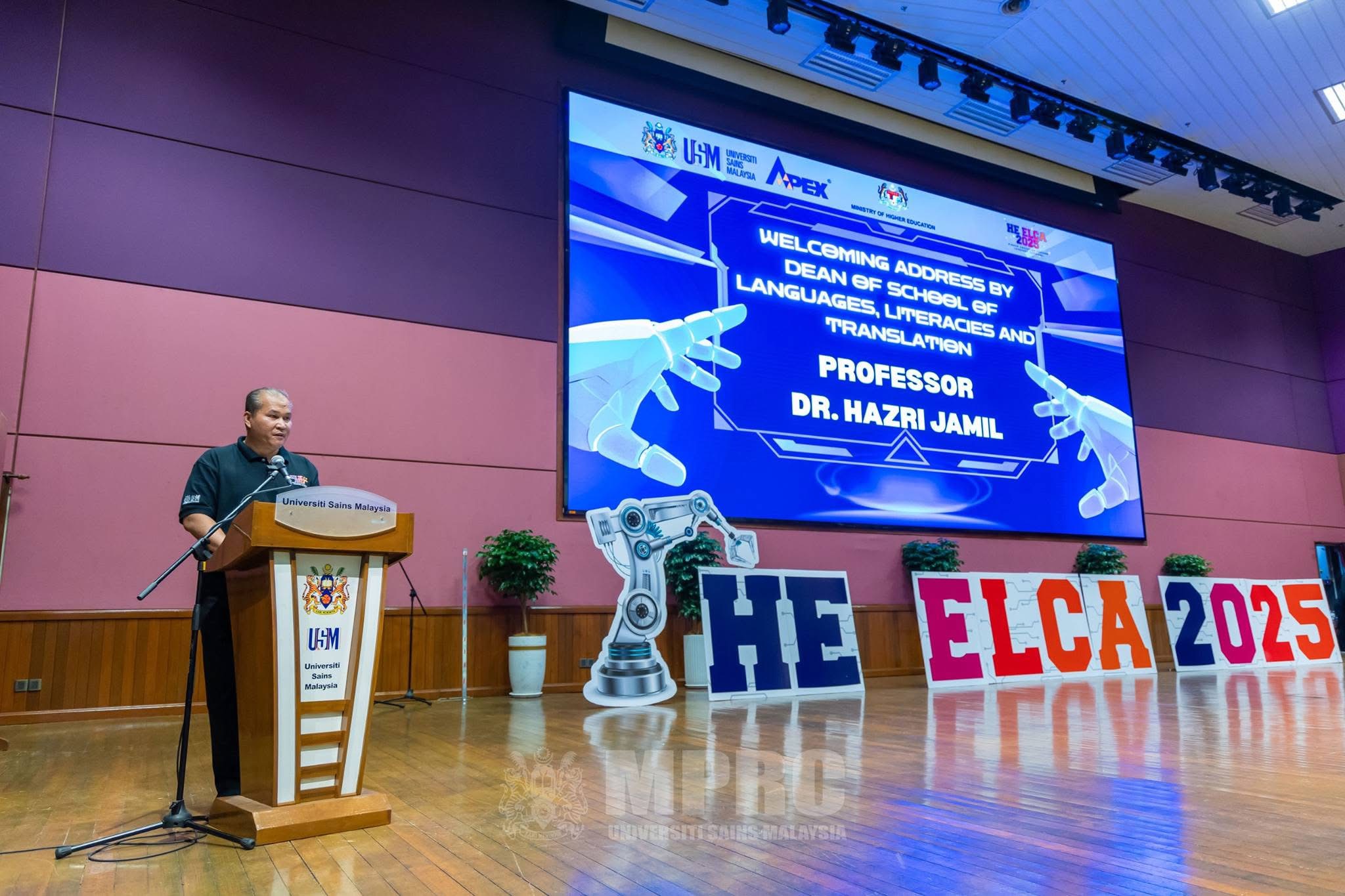
In his welcoming speech, the Dean of SoLLaT, Professor Dr. Hazri Jamil said that, “At USM, we embrace a mission which is to develop graduates with distinctive attributes, skills and values. We aim to shape young talents into future human capital, nation‑builders, and responsible global citizens. This mission aligns perfectly with this year’s HE ELCa theme: “The Future is AI: Innovate, Communicate and Sustain.”
“I encourage all students to take full advantage of HE ELCa. Participate in workshops, join interactive sessions, engage with AI‑aided tools, and use English not just as a subject, but as a resource for your future. And to our faculty and organisers, thank you for creating this platform where language, technology, and global citizenship meet,” he added.
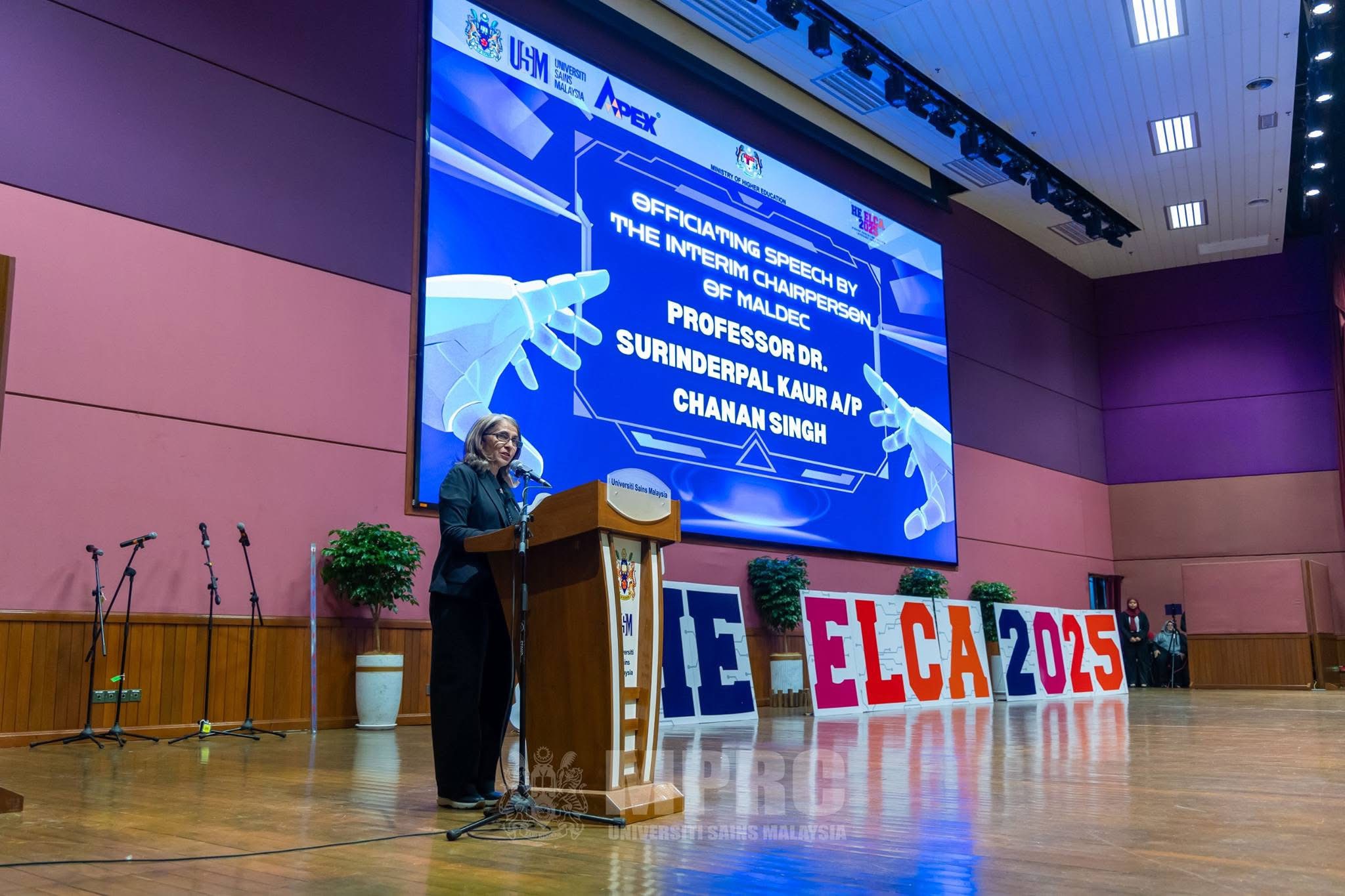
This was followed by the opening speech from the Acting Chairperson of MaLDeC, Professor Dr. Surinderpal Kaur.
In her speech, she echoed what was stated earlier by Hazri. She added that the students are the future of the country. AI and language can both be used to create a more dynamic global future.
“Use AI as a tool or a resource, together with language to make your ideas visible. Your ideas need to be clear, creative, and courageous in presentation,” she said.
She also thanked SoLLaT and JPT for creating this enriching opportunity. Such efforts would surely open doors for students, expand horizons, and build capacities that align with the nation’s vision.
To conclude, she said, “the future is indeed AI - but our human skills remain fundamental. When we innovate, communicate, and sustain, we prepare ourselves, our society, and our country for the challenges ahead. Let us harness this moment to grow, to connect, and to build a better, more inclusive future for Malaysia and beyond.”
Representatives from various universities who were present gave their thumbs-up on the organisation of HE ELCA 2025.
HE ELCa is an initiative to empower students to become confident communicators, creative thinkers, and responsible innovators.
The event reminds the people, in addition to the academia, that language is more than just words; it is about connection, confidence, and courage. It bridges innovation and humanity.
The Malaysian Language Education Deans Council (MaLDeC) together with the Department of Higher Education (JPT) serve as the Main Collaborator and Co-organiser of the HE ELCa programme.
Text: Aimi Shaheera Salleh, SoLLaT USM & HE ELCa 2025 Project Director/Editing: Mazlan Hanafi Basharudin
- Created on .
- Hits: 720
